In short
- In new homes in England, building regulations limit hot water to a bath to 48°C.
- For vulnerable people in care settings, the Health and Safety Executive says bath water must not go above 44°C.
- Thermostatic mixing valves (TMVs) blend hot and cold water to keep the temperature steady. They need checking and maintaining.
- Electric shower temperatures can change if the water flow changes.
- A bath thermometer is a simple extra check.
Who is at risk?
The Health and Safety Executive (HSE) lists older people among those at greater risk of scalding.
HSE says that if water used for bathing or showering "is above 44 °C there is increased risk of serious injury or fatality".
The temperatures in official guidance
Different figures apply in different places. They do not contradict each other:
| Figure | What it applies to | Source |
|---|---|---|
| 48°C | The most hot water a bath can deliver in newly built homes in England | Building Regulations, Approved Document G (requirement G3(4)) |
| 44°C | The most for bathing vulnerable people in health and social care settings | Health and Safety Executive |
| 41°C | The most for electric showers in the NHS, as quoted by HSE | Health and Safety Executive |
The 48°C rule applies to new homes, not to existing homes. The 44°C figure is guidance for care settings, not a legal rule for private homes — but it is a useful guide to what safe bath water means for someone at risk.
Thermostatic mixing valves (TMVs)
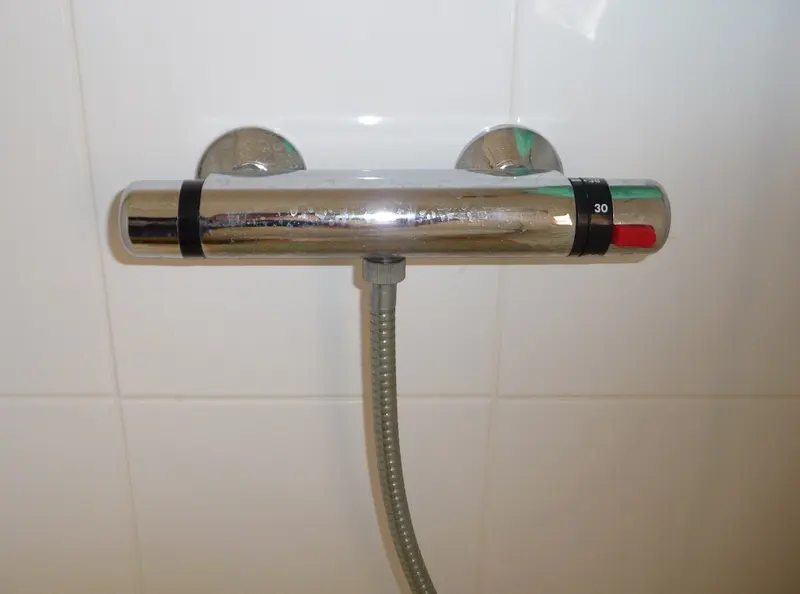
A thermostatic mixing valve blends hot and cold water to a set temperature and keeps it steady.
- For new homes, the building regulations guidance says the 48°C limit should be met with "an in-line blending valve or other appropriate temperature control device, with a maximum temperature stop", and that these valves "should not be easily altered by building users".
- Living Made Easy suggests looking for valves with TMV2 certification, which means the valve meets the British and European standards for use in homes.
- It also suggests products with the BEAB Care Mark, which keep the outlet temperature steady when the supply changes.
Electric showers
Living Made Easy says the temperature from an electric shower "may fluctuate if the water flow to the shower is reduced, perhaps when someone else runs a tap". HSE says domestic electric showers may still go above 44°C if the flow or pressure changes. If you are buying a new shower, ask about temperature-limiting features.
Keep the controls working
HSE says outlet temperatures and TMVs "should be monitored and maintained to ensure the controls are effective", and that maintenance should take account of hard water and limescale. Ask the installer what servicing your valve needs and how often. See aftercare and maintenance.
A simple check: a thermometer
HSE notes that, where vulnerable people are bathed, good professional practice includes checking the water temperature with a thermometer for "additional reassurance". A bath thermometer is a simple extra check you can use at home.
Other hot surfaces
HSE also warns about hot surfaces such as radiators and pipes in care settings. Living Made Easy says heated towel rails should not be placed where someone might use them as a grab rail, because they can cause burns if gripped.
Bathroom aids to look at
- Bath thermometer (Mats, thermometers and night lights)
Questions people ask
What temperature should bath water be?
For vulnerable people in care settings, the Health and Safety Executive says bath water must not go above 44°C. In newly built homes in England, building regulations limit the hot water to a bath to 48°C. A thermostatic mixing valve keeps the temperature steady, and a bath thermometer is a simple extra check.
Sources we checked
- GOV.UK: Approved Document G – sanitation, hot water safety and water efficiency (opens another website)
- HSE: Scalding and burning (health and social care) (opens another website)
- HSE: Managing the risks from hot water and surfaces in health and social care (HSIS6) (opens another website)
- Living Made Easy: Showers (shower safety – temperature control) (opens another website)
- Living Made Easy: Adapting your home – the bathroom (factsheet) (opens another website)
We last checked these sources on 3 October 2026. Rules and amounts can change, so please check with the organisation before you rely on them.
Get an assessment first
An occupational therapist (OT) can visit you at home and recommend what is safe and suitable for you. Ask your council’s adult social care team — in Northern Ireland, your Health and Social Care Trust.
This guide is general information, not medical, financial or legal advice. Everyone’s needs are different. Speak to an occupational therapist, your GP or the organisations we link to before making decisions.