In short
- Fit grab rails and use a non-slip mat in the bath or shower.
- Keep the floor clear of clutter, loose rugs and wires.
- Put a light on when you get up in the night. Night lights help you find the switch.
- Choose slip-resistant flooring if you are changing the floor.
- If you are worried about falling, ask your council for an assessment.
Why the bathroom?
Living Made Easy says "a high number of people experience falls in the bathroom". Floors get wet, baths are slippery, and getting in and out of a bath means stepping and balancing.
Changes recommended by the NHS
The NHS advice on preventing falls includes:
- "consider fitting safety rails on steps, and grab rails in the bathroom"
- "use a non-slip mat in the bath or shower"
- "wear a personal alarm, or carry a mobile phone with you"
- not having too much clutter at home, or things you could trip on, such as loose wires or rugs
It also says that if you are worried about falls, you can ask your local council for a care needs assessment, which can include changes to make your home safer.
A bathroom safety check
NHS inform (the NHS website for Scotland) suggests checking that:
- you use a non-slip mat or stickers if your bath is slippery
- hand rails anywhere in the bathroom are fixed to the wall securely
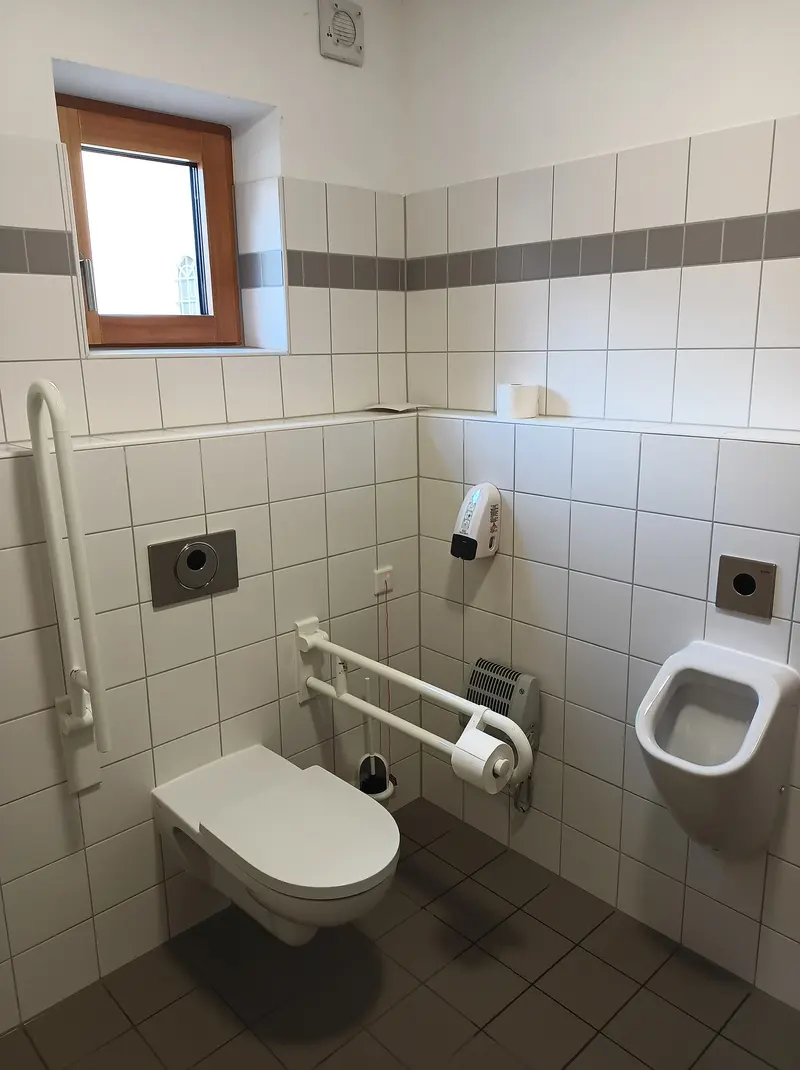
- rails are in the right places if you find it hard to get on and off the toilet, or in and out of the bath
- alarm pull cords reach the floor, so you can use them if you fall
It also warns that if you get dizzy or light-headed, "hot showers and baths can make the symptoms worse".
Lighting and night-time trips
Getting up in the night to use the toilet can be risky. NHS inform says your reactions are slower when you are sleepy, and that putting a light on "helps prevent accidents".
- Night lights in the bathroom, hallway and bedroom can guide you to the light switch, but NHS inform says they "shouldn't be used as an alternative to switching on a light".
- Keep a lamp within easy reach of your bed, and a torch in case the power goes off.
- A contrasting colour on the toilet seat helps you see where to sit.
Living Made Easy adds good lighting, suitable footwear and, if you are unsteady, possibly a commode by the bed.
Floors
If you are changing the bathroom floor, choose a slip-resistant one.
- The Health and Safety Executive (HSE) says a pendulum test value (PTV) of 36 or more means a low risk of slipping. For barefoot areas, the test should use "Slider 55" rubber.
- Living Made Easy says floors should be "firm, flush, non-directional and firmly fixed", and that "sudden changes in colour can be perceived as a step".
- Choose threshold strips (between rooms) that will not cause a trip.
Equipment that can help
Age UK lists equipment such as rails, a bath board or battery-powered bath lift, a shower seat and non-slip mats. See our bathroom aids and our guides to grab rails and shower seats.
If you fall
Have a way to call for help. See our guide to personal alarms and getting help.
Bathroom aids to look at
- Non-slip bath or shower mat (Mats, thermometers and night lights)
- Plug-in night light (Mats, thermometers and night lights)
Sources we checked
- NHS: Falls (opens another website)
- NHS inform: Prevent falls by doing a home safety check (opens another website)
- NHS inform: Prevent falls by identifying hazards at home (opens another website)
- Living Made Easy: Adapting your home – the bathroom (factsheet) (opens another website)
- HSE: Assessing the slip resistance of flooring (GEIS2) (opens another website)
- Age UK: Adapting your home (information guide) (opens another website)
We last checked these sources on 3 October 2026. Rules and amounts can change, so please check with the organisation before you rely on them.
Get an assessment first
An occupational therapist (OT) can visit you at home and recommend what is safe and suitable for you. Ask your council’s adult social care team — in Northern Ireland, your Health and Social Care Trust.
This guide is general information, not medical, financial or legal advice. Everyone’s needs are different. Speak to an occupational therapist, your GP or the organisations we link to before making decisions.