Bathroom aids and equipment
What each aid does, who it may help and what to check before you buy. We do not test or rate products, and we never show prices — they change too often.
Check before you buy
Ask your council for an assessment first. An occupational therapist can tell you which aids are safe for you, where rails should go, and may be able to provide the equipment. In England, aids and minor adaptations costing £1,000 or less are free if the assessment shows you need them.
Grab rails
Rails give you something firm to hold when you get in and out of the bath or shower, or up from the toilet. Read our guide: Grab rails: where they help and how they are fitted.
-
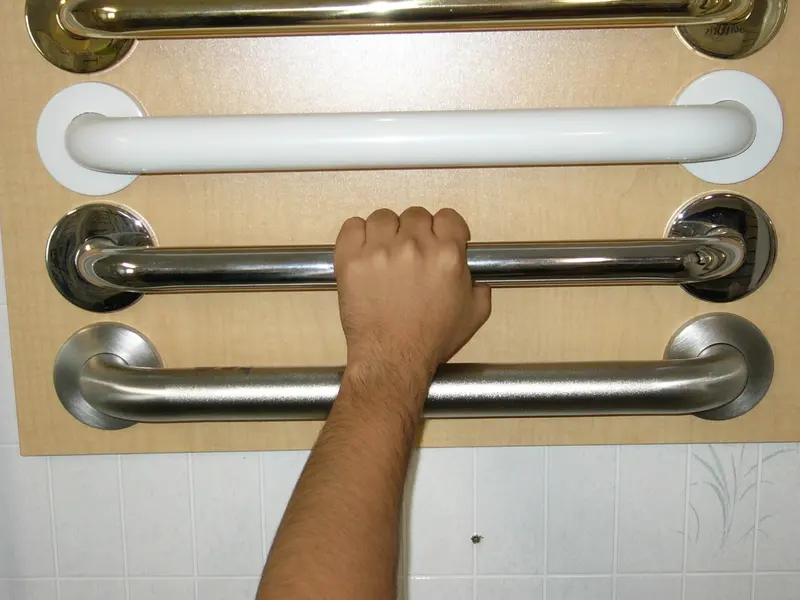
Photo: Oneweekendwebsite, CC BY-SA 3.0
Wall-fixed grab rail
A straight rail screwed firmly into the wall, to hold when you get in or out of the bath or shower, or up from the toilet.
Who it may help
Anyone who needs something steady to hold in the bathroom. Vertical rails help you pull up; horizontal rails help you steady yourself.
What to check
- A ribbed or textured grip, so it is not slippery when wet
- A gap of 50mm to 60mm between the rail and the wall for your hand (Living Made Easy)
- The right length for where it will go
- Fixings that suit your type of wall
- A colour that stands out against the wall
Safety: A rail must be fixed into a wall that can take your weight. Ask an occupational therapist where it should go. Never use taps or heated towel rails as grab rails.
-
Bath-side rail (clamps onto the bath)
A rail that clamps onto the side of the bath, giving you something to hold as you step in and out.
Who it may help
People who need a handhold at the side of the bath where there is no suitable wall for a fixed rail.
What to check
- Will it fit the width and shape of your bath rim?
- The weight limit
- How it is tightened
Safety: Living Made Easy says the fixing must be checked regularly and tightened when needed, and does not recommend these rails for plastic (acrylic) baths, which may crack.
Shower seats, stools and chairs
A seat lets you sit down to shower, which helps if standing is tiring or your balance is not steady. Read our guide: Shower seats, stools and chairs.
-
Shower stool
A free-standing stool with non-slip feet, so you can sit down to shower. Many have legs you can adjust for height.
Who it may help
People who get tired standing, or whose balance is not steady, and who can sit without back support.
What to check
- Height-adjustable legs, so your feet are flat on the floor
- Non-slip rubber feet
- The weight limit
- Whether it fits in your shower
Safety: Living Made Easy warns that a shower tray or bath must be made to take the weight of a person sitting on a stool, or it may crack.
-
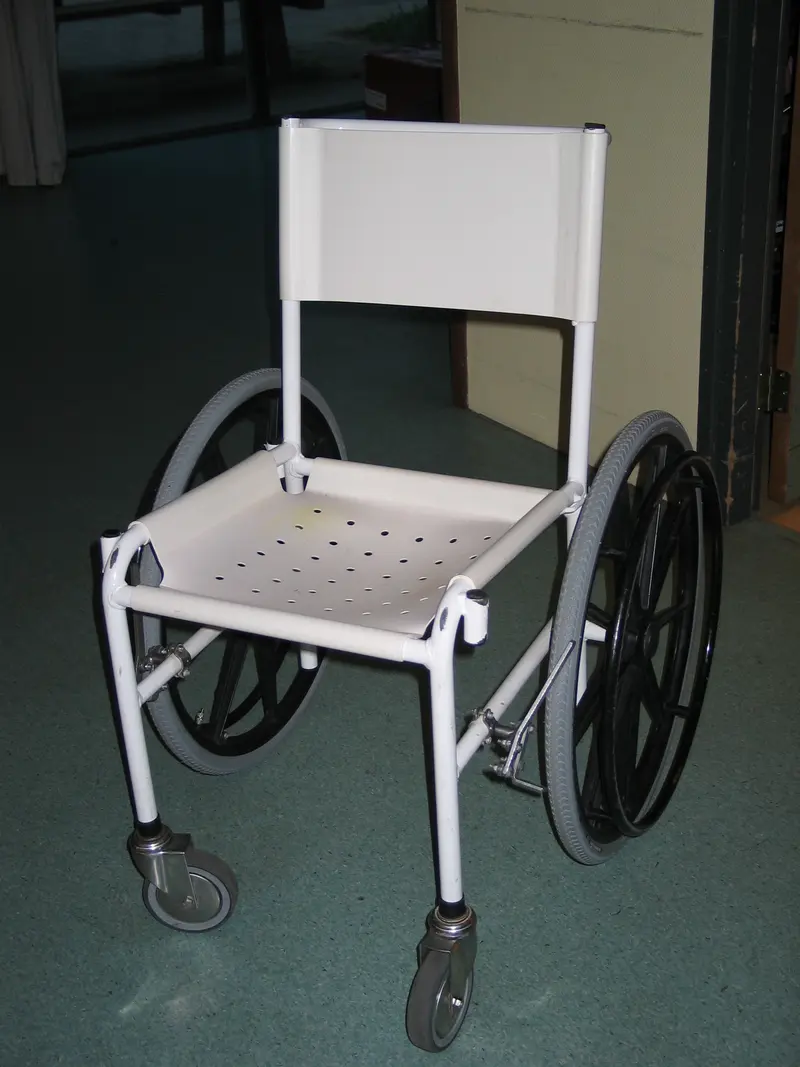
Photo: Ciell, CC BY-SA 2.5
Shower chair
A shower seat with a back, and sometimes arms, for more support when you sit down and get up. Some shower chairs have wheels so they can be pushed into a level-access shower.
Who it may help
People who need back support, or something to push up from, when showering.
What to check
- A backrest, and arms if you need them
- The weight limit
- The size, compared with your shower space
- If it has wheels: brakes, and a level floor to use it on
Safety: Wheeled shower chairs need a level floor, such as a level-access shower or wet room. Ask an occupational therapist which type is safe for you.
-
Wall-mounted fold-down shower seat
A seat fixed to the shower wall that folds up out of the way when you do not need it.
Who it may help
People who want a seat that does not take up floor space, often as part of a new shower.
What to check
- The weight limit
- Whether it has legs to the floor or is held only by the wall brackets
- A rail next to it to help you sit and stand
Safety: Living Made Easy says the wall and fixings must be able to take the weight of the person sitting on it. It should be fitted by a competent installer.
Bath lifts, boards and seats
These help you keep using your bath: a board or seat across the bath, or a powered lift that lowers you into the water. Read our guide: Bath lifts, bath boards and bath seats.
-
Bath board
A waterproof board that sits across the top of the bath. You sit on it, swing your legs over, and wash sitting down.
Who it may help
People who can sit steadily and move sideways onto a seat, but find stepping into the bath hard.
What to check
- Check your bath rims are level and the same height on both sides
- Measure the width of your bath rim and check it against the board's instructions
- The weight limit
- Grip handles
Safety: Living Made Easy says you need reasonable grip and strength, good sitting balance and to bend 90 degrees at the hips. Check the brackets regularly.
-
Bath seat
A seat that sits inside the bath, so you do not have to lower yourself all the way to the bottom.
Who it may help
People who can get into the bath with help, such as a bath board, but find it hard to get down to the bottom and back up.
What to check
- Whether it suits your type of bath
- The weight limit
- Use it with a slip-resistant bath mat
Safety: Living Made Easy says most plastic (acrylic) baths are not strong enough for wedge-in bath seats.
-
Powered bath lift
A battery-powered seat that sits in your bath, lowers you into the water and raises you back up to the rim.
Who it may help
People who want to keep having baths, and can sit on the bath edge and lift their legs over the side.
What to check
- The weight limit
- Back support (Living Made Easy says lifts without it are only safe with very good core strength)
- A waterproof handset
- Whether it fits your bath (Living Made Easy says a 1700mm bath allows room for most bath equipment)
Safety: You still need to lift your legs over the bath rim. Charge the battery regularly, and charge it outside the bathroom.
Raised toilet seats and toilet frames
These make the toilet higher or give you arms to push up from. Read our guide: Raised toilet seats and toilet frames.
-
Raised toilet seat
A thick seat that fits on top of the toilet bowl and makes the toilet higher, so you do not have to bend so far.
Who it may help
People whose knees are higher than their hips when they sit on the toilet, or who find it hard to sit down and get up.
What to check
- The height you need (sit on the toilet and check whether your thighs are level)
- That it fits your toilet bowl
- How it clamps on
- The weight limit
Safety: Living Made Easy says to check it is fastened securely and does not move.
-
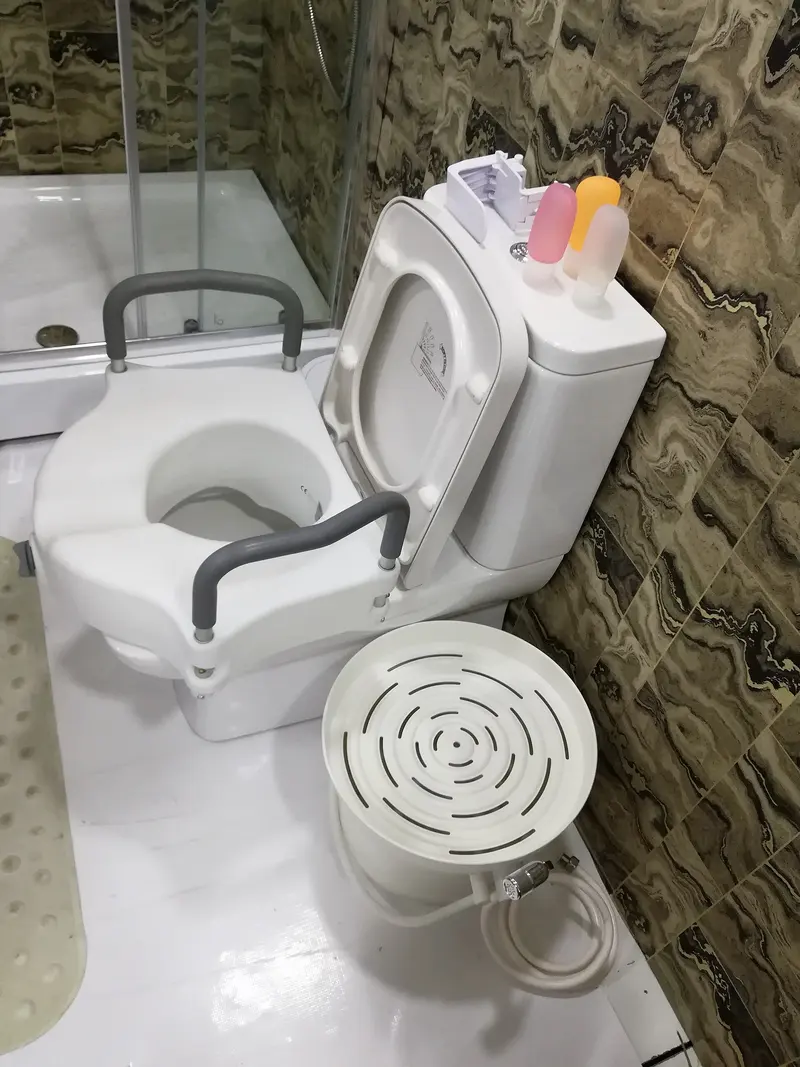
Photo: Ashashyou, CC BY-SA 3.0
Raised toilet seat with arms
A raised toilet seat with padded arms on each side to push up from.
Who it may help
People who need both a higher seat and something to hold.
What to check
- That it fits your toilet bowl
- The weight limit
- Whether the arms fold up if someone else needs the toilet
Safety: Living Made Easy says seats with arms should not be used by people with weakness on one side unless they can be fixed to the floor.
-
Toilet frame (toilet surround)
A frame that stands around the toilet, giving you arms to hold as you sit down and get up.
Who it may help
People who need support getting on and off the toilet.
What to check
- Adjustable height and width
- Non-slip feet
- The weight limit
- Space around your toilet
Safety: Living Made Easy says frames should not be used by people with weakness on one side unless the frame can be fixed to the floor.
Taps and small aids
Easier-to-turn taps and long-handled tools for washing. Read our guide: Lever taps and other small aids.
-
Tap turners
Handles that fit onto the top of your existing taps, so they are easier to turn.
Who it may help
People with a weak grip or painful hands, such as from arthritis.
What to check
- That they fit the shape of your taps
- Colour-coded hot and cold
Safety: If you are replacing taps anyway, lever taps may be a better long-term choice. Ask your council about accessible taps.
-
Long-handled sponge
A sponge on a long handle, so you can wash your back and feet with less bending and stretching.
Who it may help
People with stiff joints, or who find it hard to bend or reach.
What to check
- Handle length
- A handle that is easy to grip
- Whether the sponge head can be replaced
Safety: Living Made Easy suggests using long-handled aids while sitting down, so reaching does not upset your balance.
Mats, thermometers and night lights
Simple things that cut the risk of slips, falls and scalds. Read our guide: Preventing slips and falls in the bathroom.
-
Non-slip bath or shower mat
A mat with suckers that grips the bottom of the bath or shower, to cut the risk of slipping.
Who it may help
Everyone who uses a bath or shower tray — the NHS advises using a non-slip mat.
What to check
- The right size for your bath or shower tray
- Plenty of suction cups
- Easy to clean and dry
Safety: Living Made Easy says to check the mat is securely stuck down before every use.
-
Bath thermometer
A thermometer that floats in the bath or shows the water temperature, as an extra check against scalds.
Who it may help
Anyone at risk of scalds, and carers who run baths for someone else.
What to check
- Large, clear numbers
- A scale in °C
Safety: A thermometer is an extra check, not a replacement for proper temperature controls. See our guide to preventing scalds.
-
Plug-in night light
A small light for the hallway or bedroom that helps you find your way, and the light switch, at night.
Who it may help
People who get up in the night to use the toilet.
What to check
- Where you will plug it in (sockets are not allowed in most of the bathroom)
- A light sensor or motion sensor, if you want it to come on by itself
Safety: NHS inform says night lights help guide you to the light switch but should not be used instead of switching on a proper light.
-
Bath water-level alarm
A small device that beeps when the bath water reaches it, so you know the bath is full.
Who it may help
Anyone who might forget a running bath, or finds it hard to see the water level.
What to check
- A loud, clear sound
- Easy to fix in the right place
Safety: Age UK also lists safety plugs that limit the water level, and flood detectors.
Amazon links go to search results or product pages on Amazon.co.uk. As an Amazon Associate I earn from qualifying purchases. We do not show Amazon prices, ratings or pictures here — please check the details, sizes and weight limits on the product page before you buy. How this site is paid for.