In short
- A raised toilet seat makes the toilet higher, so you do not have to bend so far.
- Most clamp onto the toilet bowl. Check it is fastened securely and does not move.
- Toilet frames and seats with arms give you something to push up from.
- Frames may not suit people with weakness on one side unless the frame is fixed to the floor.
- Always check the weight limit.
Is your toilet the right height?
Living Made Easy gives a simple test. Sit on the toilet with your feet flat on the floor. If your thighs are level, with your knees and hips at the same height, "then the toilet is probably a good height for you". If your knees are higher than your hips, it may help to raise the seat.
Raised toilet seats
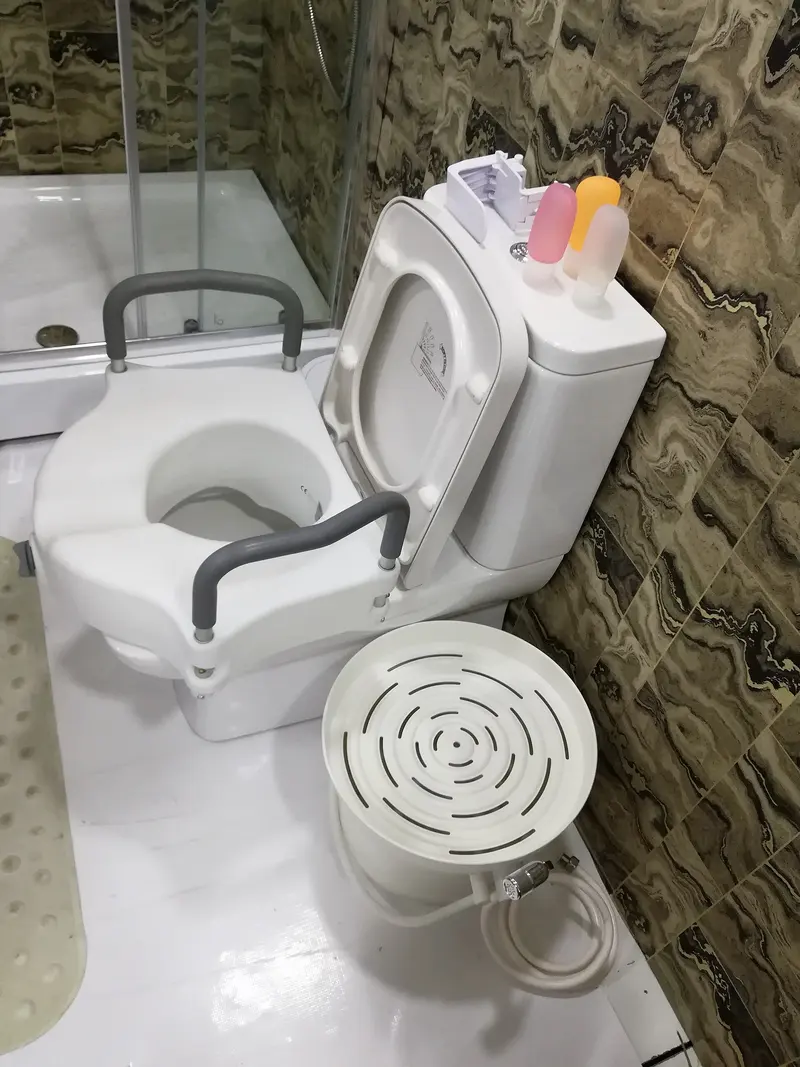
Living Made Easy says most raised toilet seats "clamp onto the rim of the toilet bowl", and the original seat stays in place, lifted up out of the way. Some replace the original seat.
When you use a raised toilet seat, Living Made Easy says "it is important to check that it is fastened securely and does not move". Check it often.
Toilet frames and seats with arms
A toilet frame (sometimes called a toilet surround) stands around the toilet and gives you arms to hold and push up from. Some raised seats have arms built in.
Living Made Easy says these "should not be considered if you have a one-sided weakness unless it can be fixed to the floor", and to "always check that the weight capacity of any toilet equipment you use exceeds your weight".
Grab rails by the toilet
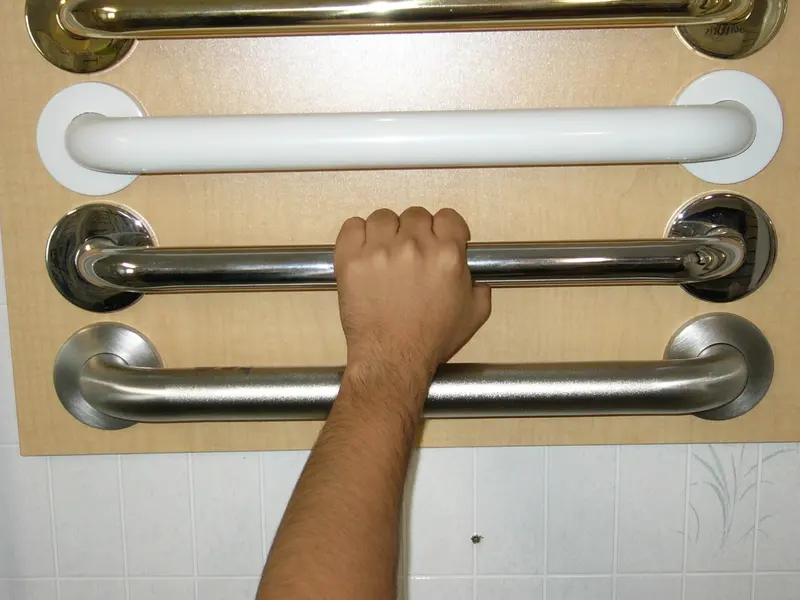
A rail on the wall next to the toilet, or a fold-down rail, can help you sit down and get up. NHS inform advises using "properly placed hand rails" if you find it hard to get on and off the toilet. See our grab rails guide.
Seeing the toilet clearly
NHS inform suggests using a contrasting colour, for example on the toilet seat, to help you see where to sit. Good lighting helps too, especially at night. See our guide to preventing slips and falls.
Other toilet aids
Age UK lists a raised toilet seat, toilet frame, grab rail and commode as equipment that can help with using the toilet. It also lists "a hands-free toilet with an automatic washing and drying function" among larger adaptations.
VAT
HMRC's VAT guidance lists "frames or other devices to help sitting on or rising from a sanitary appliance" among the items that can be zero-rated (no VAT) when supplied to a disabled person. See our VAT relief guide.
Bathroom aids to look at
- Raised toilet seat (Raised toilet seats and toilet frames)
- Raised toilet seat with arms (Raised toilet seats and toilet frames)
- Toilet frame (toilet surround) (Raised toilet seats and toilet frames)
Sources we checked
- Living Made Easy: Adapting your home – the bathroom (factsheet) (opens another website)
- Living Made Easy: Raised toilet seats (opens another website)
- Age UK: Factsheet 42 – Disability equipment and home adaptations (opens another website)
- NHS inform: Prevent falls by identifying hazards at home (opens another website)
- HMRC: Reliefs from VAT for disabled and older people (VAT Notice 701/7) (opens another website)
We last checked these sources on 3 October 2026. Rules and amounts can change, so please check with the organisation before you rely on them.
Get an assessment first
An occupational therapist (OT) can visit you at home and recommend what is safe and suitable for you. Ask your council’s adult social care team — in Northern Ireland, your Health and Social Care Trust.
This guide is general information, not medical, financial or legal advice. Everyone’s needs are different. Speak to an occupational therapist, your GP or the organisations we link to before making decisions.