In short
- If you are disabled or have a long-term illness, adapting a bathroom, shower room or wet room for your needs can be free of VAT (zero-rated).
- Being older is not enough on its own for the zero rate.
- If you are 60 or over, six items have VAT at 5% when they are supplied and installed in your home.
- You sign a written declaration for the supplier. HMRC does not issue a certificate.
- HMRC cannot refund VAT to you. If you were wrongly charged, ask the supplier.
Two different reliefs
There are two separate VAT reliefs. Which one you can use depends on whether you are disabled and on your age.
| At a glance | No VAT (zero rate) | 5% VAT (reduced rate) |
|---|---|---|
| Who | People who are "chronically sick or disabled" | People aged 60 or over |
| What | Adapting a bathroom, washroom or toilet to suit the person's condition, plus equipment designed for disabled people | Six listed mobility aids, supplied and installed in your home |
| Age alone enough? | No | Yes — you do not need to be disabled |
No VAT if you are disabled
Who counts as disabled?
HMRC says a person is "chronically sick or disabled" if they have:
- a physical or mental impairment with a long-term and substantial effect on their ability to do everyday activities, or
- a condition that doctors treat as a chronic sickness, such as diabetes
HMRC says the relief is not means-tested, does not depend on benefits, and you do not need to be registered disabled. But it "does not include an elderly person who is not disabled or chronically sick", or someone only temporarily disabled, such as with a broken limb.
What work is covered?
HMRC says builders can zero-rate "providing, extending or adapting a bathroom, washroom or lavatory" when the work is necessary to suit the condition of a disabled person in their own home. For this relief, HMRC says a bathroom "includes a shower or 'wet' room".
HMRC gives examples such as:
- having a bath removed and replaced with a shower or walk-in bath, if your disability makes it hard to get in and out of a normal bath
- having a bathroom put in on the ground floor, if your disability means you cannot get upstairs
Work that is needed to provide the new facilities can be zero-rated too, such as plumbing, drainage, electrics, and putting back the decoration and tiling nearby.
What is not covered
- A new bathroom or refit "as a general home improvement".
- Fees for an architect, surveyor or consultant (unless part of a single "design and build" contract).
- Materials you buy for a friend or relative to fit for free, or to fit yourself.
Equipment
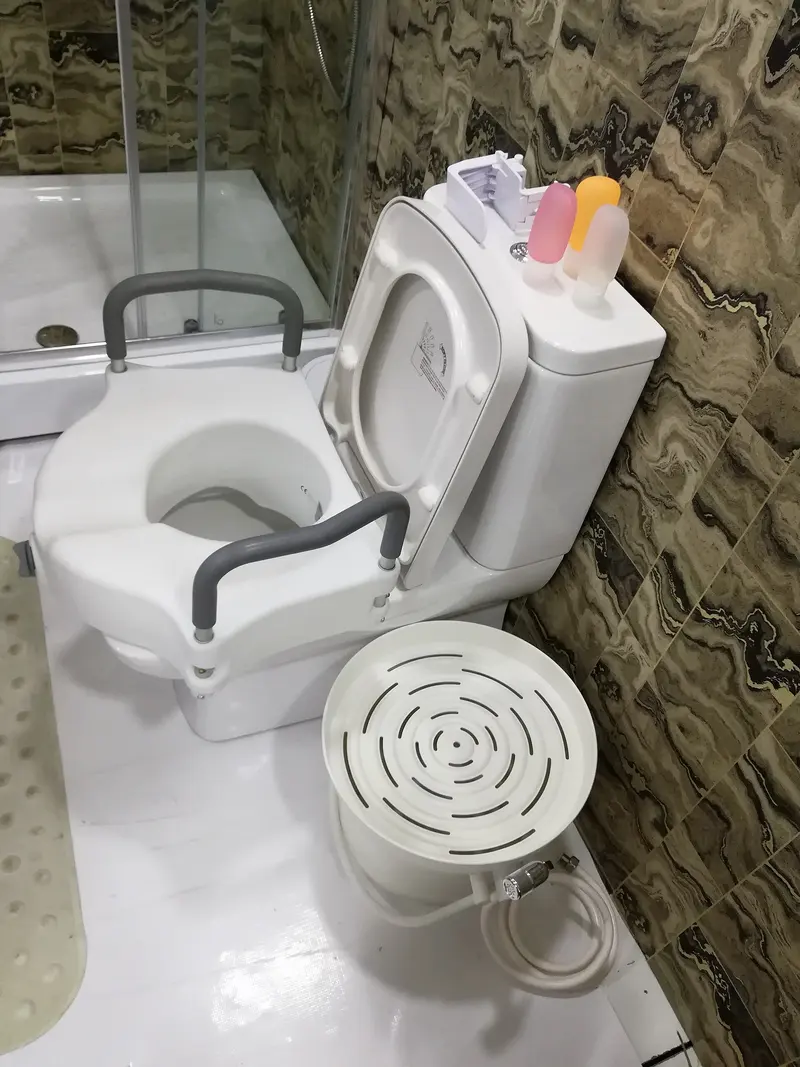
Age UK says disabled people "do not have to pay Value Added Tax (VAT) when buying equipment designed or adapted to help with daily living". HMRC's notice lists items such as commode chairs, and "frames or other devices to help sitting on or rising from a sanitary appliance".
5% VAT if you are 60 or over
HMRC says the reduced rate applies to these six items when they are supplied and installed in the home of someone aged 60 or over:
- grab rails
- ramps
- stair lifts
- bath lifts
- built-in shower seats, or showers containing built-in shower seats
- walk-in baths with sealable doors
Things to know:
- The installer must supply and fit the item. Buying the item on its own does not count.
- Someone else (a relative, a charity or the council) can order and pay for it.
- It must be a private home, not a care home.
- Repairs and replacements after installation do not get the reduced rate.
- General adaptations, such as building an extension, do not get the reduced rate.
The declaration
HMRC does not issue a certificate. Instead, you give each supplier a signed written declaration:
- It should be separate from the order form or invoice.
- If you cannot sign it yourself, a relative, partner or other responsible person can.
- Do not send it to HMRC. The supplier keeps it.
- Only sign if you are sure you qualify — HMRC says there are penalties for false declarations.
For the 5% rate, HMRC gives this wording: "I ……… (full name) of ……… (the address where the installation is taking place) declare that I am 60 or over and that this supply and installation qualifies for the reduced rate of VAT in accordance with the Value Added Tax (Reduced Rate) Order 2007."
For the zero rate, HMRC publishes a declaration form for disabled people (opens another website). Your supplier may give you their own form.
Grants and VAT
If your work is paid for by a Disabled Facilities Grant, HMRC says the builder's invoice should make clear the work was done for the disabled person who was given the grant.
If you were charged VAT by mistake
HMRC says: "There's no facility for HMRC to refund VAT to you." If you think you qualified but were charged VAT, ask your supplier for a refund.
Questions?
HMRC has a helpline for VAT reliefs for disabled and older people: 0300 123 1073, Monday to Friday, 8:30am to 5:30pm (closed on bank holidays). HMRC says its advisers "cannot tell you whether or not you're disabled or chronically sick".
Questions people ask
Do I have to pay VAT on a walk-in bath?
If you are disabled or have a long-term illness, and a walk-in bath is fitted because you find it hard to get in and out of a normal bath, the work can be free of VAT. If you are 60 or over, a walk-in bath with a sealable door has VAT at 5% when it is supplied and installed in your home. You sign a declaration for the supplier — HMRC does not issue a certificate.
Sources we checked
- HMRC: Reliefs from VAT for disabled and older people (VAT Notice 701/7) (opens another website)
- HMRC: VAT relief on certain building work if you have a disability (opens another website)
- GOV.UK: VAT relief for disabled people (opens another website)
- GOV.UK: VAT on mobility aids (5% for people aged 60 or over) (opens another website)
- HMRC: Declaration of eligibility for VAT relief (disabled person) (opens another website)
- HMRC: VAT reliefs for disabled and older people – helpline (opens another website)
- Age UK: Factsheet 42 – Disability equipment and home adaptations (opens another website)
We last checked these sources on 3 October 2026. Rules and amounts can change, so please check with the organisation before you rely on them.
Get an assessment first
An occupational therapist (OT) can visit you at home and recommend what is safe and suitable for you. Ask your council’s adult social care team — in Northern Ireland, your Health and Social Care Trust.
This guide is general information, not medical, financial or legal advice. Everyone’s needs are different. Speak to an occupational therapist, your GP or the organisations we link to before making decisions.