In short
- Contact your council's social work or social care team and ask for an assessment.
- If an assessment says a major adaptation is essential, owners and private tenants can get a grant of at least 80% of the approved cost.
- People who get certain benefits can get 100% of the approved cost.
- Council and housing association tenants should contact their landlord.
- Care and Repair services can give independent advice in many council areas.
No Disabled Facilities Grants in Scotland
GOV.UK confirms that Disabled Facilities Grants "are not available" in Scotland. Instead, each council has a scheme of assistance under the Housing (Scotland) Act 2006. Your council publishes its own scheme with local details.
Step 1: get an assessment
mygov.scot says your local council's social care department can arrange equipment and adaptations. Contact your council's social work team and they will arrange a care needs assessment.
Care Information Scotland (an NHS 24 service) says you can refer yourself to an occupational therapist by contacting your council's social care department, or ask your GP, nurse or social worker to refer you.
mygov.scot gives "replacing your shower with a level-access shower" as an example of a home adaptation.
Step 2: grants for owners and private tenants
The Scottish Government's guide for homeowners says you must have an assessment if you want financial help, and "you will only receive a grant if the assessment concludes that a major adaptation is essential". It gives "replacing the bath with a shower" as an example.
- At least 80%. The law says the council must give a grant for essential structural adaptations, and the grant is 80% of the approved cost. The homeowners' guide says this 80% "does not depend on your income".
- 100% for some people. The 2008 regulations give 100% to people who get certain benefits: income support, income-based jobseeker's allowance, pension credit guarantee credit, or income-related employment and support allowance. A 2023 Scottish Government page for families with disabled children says families getting Universal Credit when the grant is awarded get 100%. Ask your council which benefits count now.
- Top-ups. The homeowners' guide says some councils top up the 80% grant, usually depending on your income.
- No set upper limit. The 2011 homeowners' guide says "there is no upper limit to the cost of the work", but the council will check that the cost is reasonable.
Smaller changes
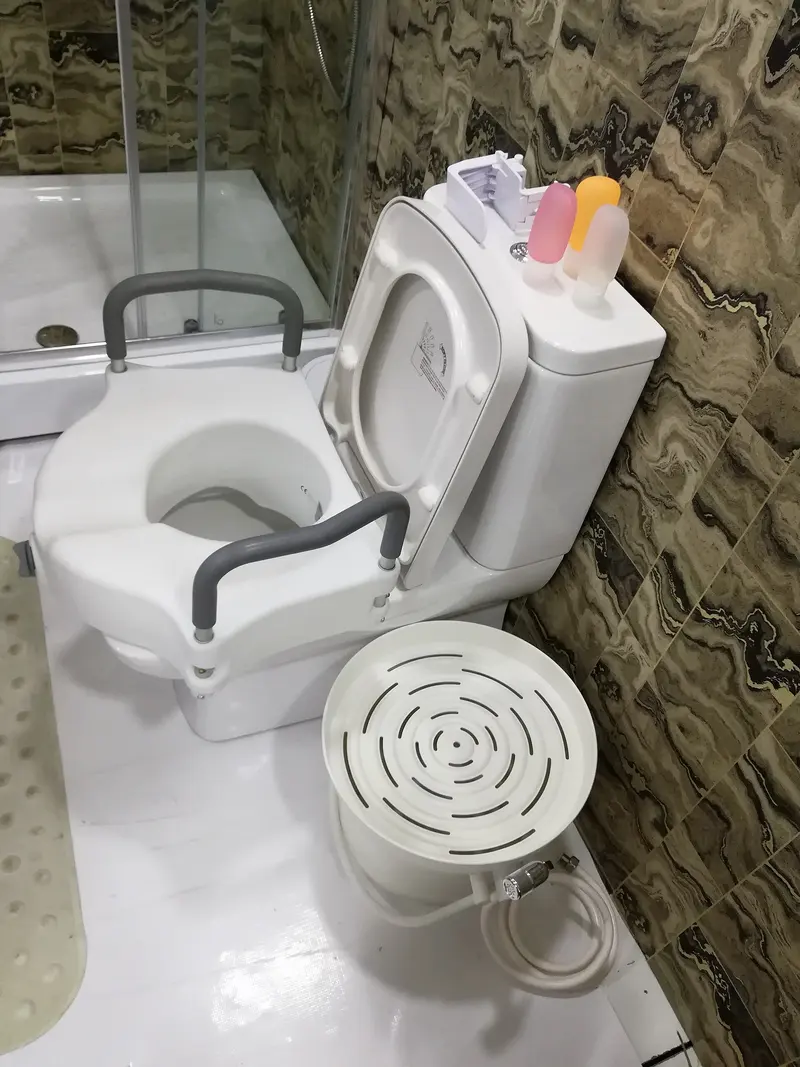
The homeowners' guide says there are different arrangements for smaller changes, "such as fitting grab rails". Ask your council's social work team about equipment and minor adaptations.
Council and housing association tenants
Care Information Scotland says:
- if you are a council tenant, your council may pay for changes to your home
- if you rent from a housing association (registered social landlord), your landlord may pay
Independent help
Care and Repair Scotland says it offers "independent advice and assistance to help elderly and disabled homeowners repair, improve or adapt their homes". It says its services are available in 28 council areas.
See also our guides to VAT relief and charities and free advice.
Sources we checked
- mygov.scot: Care equipment and adapting your home (opens another website)
- mygov.scot: How to apply for care equipment or home adaptations (opens another website)
- Scottish Government: Funding adaptations to the home – a guide for homeowners (2011) (opens another website)
- Scottish Government: Supporting disabled children, young people and their families – housing (updated 8 November 2023) (opens another website)
- Scheme of Assistance Regulations 2008, regulation 4 (legislation.gov.uk) (opens another website)
- Care Information Scotland: Help making changes to your home (opens another website)
- Care Information Scotland: Occupational therapy (opens another website)
- Care and Repair Scotland (opens another website)
- GOV.UK: Disabled Facilities Grants – what you'll get (opens another website)
We last checked these sources on 3 October 2026. Rules and amounts can change, so please check with the organisation before you rely on them.
Get an assessment first
An occupational therapist (OT) can visit you at home and recommend what is safe and suitable for you. Ask your council’s adult social care team — in Northern Ireland, your Health and Social Care Trust.
This guide is general information, not medical, financial or legal advice. Everyone’s needs are different. Speak to an occupational therapist, your GP or the organisations we link to before making decisions.