Over Christmas and the new year, plenty of bathrooms go unused for a while: someone goes to stay with family, comes home after a spell in hospital, or the spare bathroom that only gets used when the grandchildren visit is shut up again in January. Before anyone uses that shower again, it's worth running the water through.
This article explains why, using advice from the NHS, the Health and Safety Executive (HSE) and two councils' guidance for their tenants. It's general information and applies to ordinary homes; care homes and other workplaces have their own legal duties.
Why it matters
The NHS explains that Legionnaires' disease is a lung infection you can get by breathing in tiny droplets of water containing the bacteria that cause it. It lists taps and showers that are not used often among the places it can come from, along with air conditioning, humidifiers, spa pools and hot tubs. You usually can't catch it by drinking water, or from other people.
Cheshire West and Chester Council says domestic water systems like the one in your home are very low risk, and Stevenage Borough Council says "there is no need for concern". The point isn't to worry — it's to make flushing through a simple habit, especially for someone who is older or unwell.
The bacteria thrive in lukewarm water: Cheshire West and Chester Council gives the range as 20 to 45°C. That is one reason the advice focuses on outlets that haven't been used for a while.
How to flush through
The councils' advice is similar:
- After being away for more than a week — including a hospital stay — or if a room hasn't been used, run each tap and shower before you use it. Cheshire West and Chester says to let the hot water system reach its normal temperature first and then run each tap for at least five minutes, running cold taps until the water runs cold. Stevenage also says 5 minutes, from a safe distance.
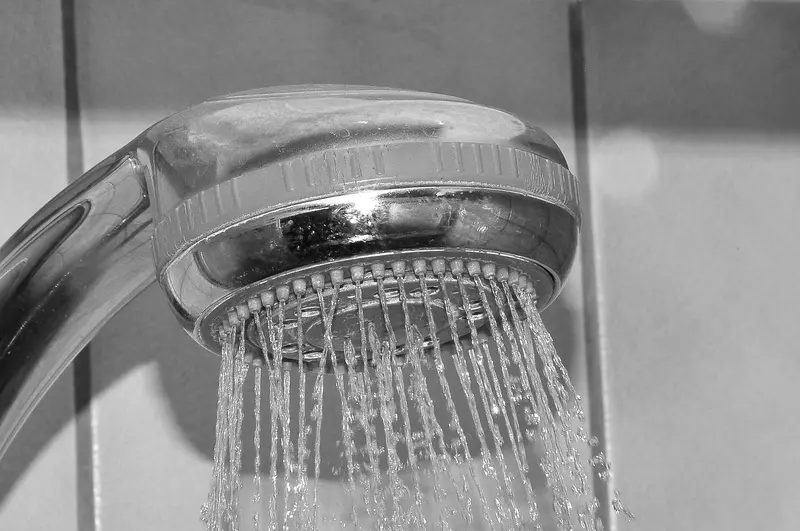
- Avoid the spray. Open the taps slowly and try not to cause splashing or release spray into the air. With a shower, you might lay the head in the bath or tray, or put it in a bucket, rather than stand under it.
- Little-used outlets: use all taps and outlets at least once a week, Cheshire West and Chester says. The HSE's guidance for buildings likewise suggests weekly flushing of outlets that aren't used often.
If the person who has been away can't do this easily, it's a job a family member or carer can do before they come home — it fits naturally with turning the heating on and getting some milk in.
Keep shower heads clean
Limescale gives bacteria somewhere to grow. Cheshire West and Chester suggests cleaning shower heads and tap spouts regularly with a nylon brush and then soaking them in a household descaling solution. Stevenage suggests cleaning them about every three months, and the HSE's guidance for buildings says to dismantle, clean and descale shower heads quarterly.
Cheshire West and Chester also suggests fitting a retaining ring on a flexible shower hose so the head can't fall into the bath water. Our guide to aftercare and maintenance covers looking after showers, seats and rails.
Hot water temperature — and scalds
The councils say hot water should be stored at 60°C, and the HSE's guidance for buildings gives the same figure. But both councils also warn that water at that temperature can scald.
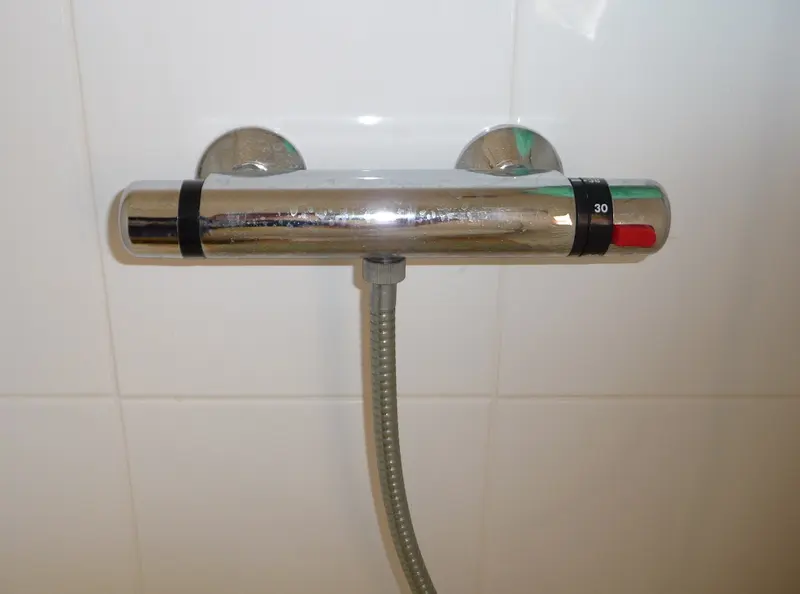
For an older or disabled person, scalds are a real risk. The usual answer is to store hot water hot and fit a thermostatic mixing valve or a thermostatic shower so the water that comes out is at a safe temperature. Our guide to preventing scalds explains the safe bathing temperatures and the options. Don't turn the boiler or cylinder thermostat down on your own; ask a qualified heating engineer, or your landlord if you rent.
- Bath thermometerMats, thermometers and night lights
A thermometer that floats in the bath or shows the water temperature, as an extra check against scalds.
What each aid is and what to check before buying is on our bathroom aids page. We do not test or rate products. An occupational therapist can tell you which aids are safe for you.
When to get medical help
The NHS suggests asking for an urgent GP appointment or contacting NHS 111 if you have a cough that has lasted 3 weeks or more, cough up blood, have chest pain that comes and goes or feel short of breath — and to mention if you've stayed in a hotel, spa or hospital in the last 10 days.
A homecoming checklist
- Turn the heating and hot water on.
- Run each tap and the shower for five minutes, gently, keeping your face away from the spray.
- Check the shower head for limescale.
- Make sure grab rails, seats and any alarm are where they should be — see coming home from hospital.
-
 Preventing scalds: hot water safety
Hot bath or shower water can badly hurt older people and people with poor feeling in their skin. How temperature controls work, and the official figures.
-
 Aftercare and maintenance
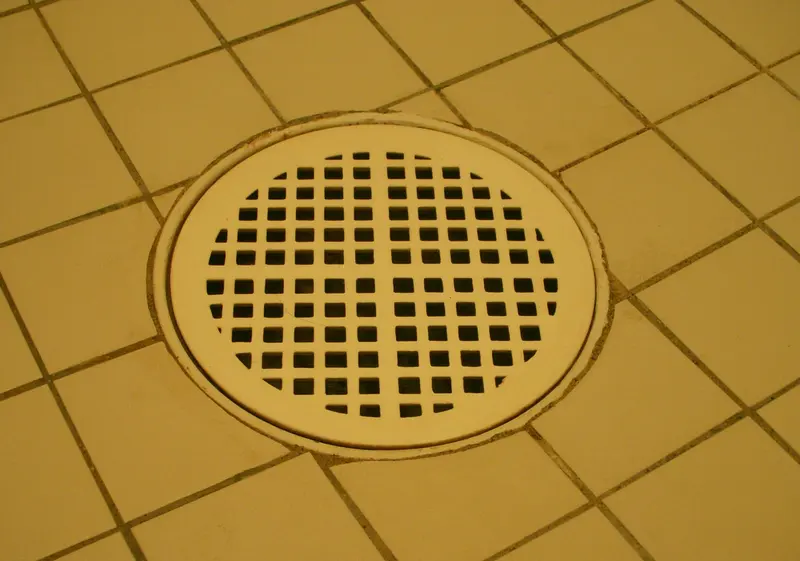
Simple checks to keep your new bathroom and equipment safe — grab rails, seats, mats, bath lift batteries, temperature controls and showers that are not used often.
Photo: Holger.Ellgaard, CC BY-SA 3.0
-
 Coming home from hospital: help with the bathroom
After a stay in hospital, a fall or an illness, washing and using the toilet can be harder for a while. How free short-term care and equipment work in England, what to ask before you leave hospital, and what happens next.
Photo: James Allan, CC BY-SA 2.0
Sources we checked
- NHS: Legionnaires' disease (page last reviewed 21 July 2023) (opens another website)
- HSE: Legionella — things to consider (hot and cold water systems) (opens another website)
- Cheshire West and Chester Council: Water safety (advice for council tenants) (opens another website)
- Stevenage Borough Council: Legionella prevention — important advice for tenants (opens another website)
Checked 23 November 2026. Rules, amounts and phone numbers can change, so please check with the organisation before you rely on them.
Get an assessment first
An occupational therapist (OT) can visit you at home and recommend what is safe and suitable for you. Ask your council’s adult social care team — in Northern Ireland, your Health and Social Care Trust.
This article is general information, not medical, financial or legal advice. Everyone’s needs are different. Speak to an occupational therapist, your GP or the organisations we link to before making decisions.