Winter brings vomiting bugs as well as colds. Norovirus, the "winter vomiting bug", spreads easily within a household — and the bathroom is where much of that happens. If you look after someone who is older, unwell or needs help with washing and the toilet, a few habits make a real difference.
This article summarises advice from the NHS and the UK Health Security Agency (UKHSA). It is general information; if you are worried about someone's health, contact NHS 111 or their GP.
Hand washing — and why gel isn't enough
Both the NHS and UKHSA say to wash your hands thoroughly with soap and warm water:
- after using the toilet or helping someone else to use it
- after caring for someone who is being sick
- before preparing, serving or eating food
The NHS points out that alcohol hand gels do not kill norovirus. Gel has its uses, but it doesn't replace soap and water here.
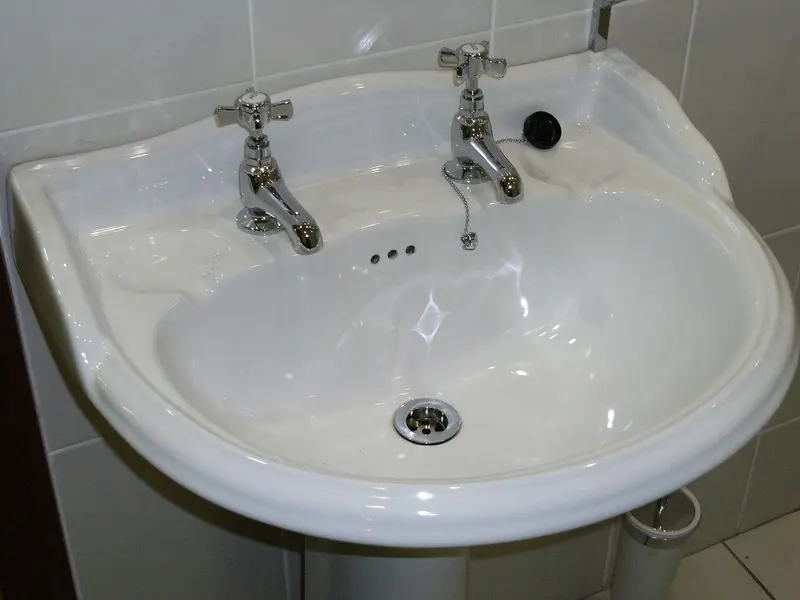
If the person you care for finds it hard to wash their hands at the basin — taps that are stiff to turn, or a basin that is awkward to reach — that's worth fixing anyway. Lever taps and tap turners are covered in our guide to lever taps and small aids.
- Tap turnersTaps and small aids
Handles that fit onto the top of your existing taps, so they are easier to turn.
- Long-handled spongeTaps and small aids
A sponge on a long handle, so you can wash your back and feet with less bending and stretching.
What each aid is and what to check before buying is on our bathroom aids page. We do not test or rate products. An occupational therapist can tell you which aids are safe for you.
Cleaning the bathroom
The NHS says to clean toilet seats, flush handles, taps and bathroom door handles. UKHSA's advice is to use bleach-based cleaners to disinfect surfaces.
A practical routine while someone is ill:
- Clean the toilet seat, flush handle, taps and door handles at least daily, and after any accident.
- Use a bleach-based product on hard surfaces, following the instructions on the label.
- Open a window afterwards if you can.
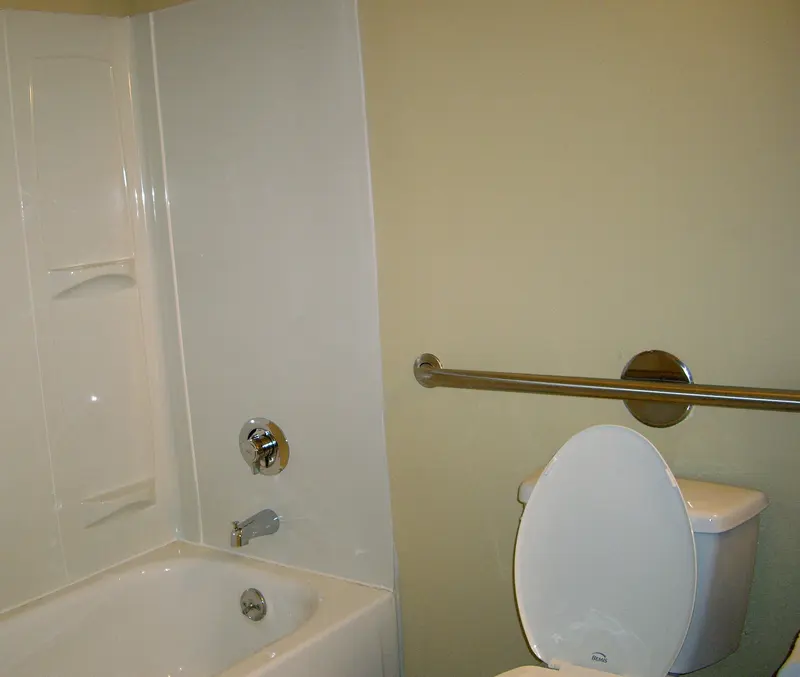
Grab rails, toilet frames, shower seats and raised toilet seats are touched constantly. Clean them as you would the toilet seat, checking the maker's instructions for anything with padded or fabric parts. If you are not sure how to clean a particular piece of equipment provided by the council, ask the service that supplied it.
Laundry
The NHS says to wash clothes and bedding that have poo or vomit on them separately, on a 60°C wash. UKHSA suggests using disposable gloves to handle them.
How long to stay apart
The NHS says not to go back to work, school or nursery until there has been no sickness or diarrhoea for 2 days, and not to visit hospitals or care homes until then either. UKHSA also suggests avoiding A&E and GP surgeries while you have symptoms unless a health professional tells you to go — phone NHS 111 or the surgery instead.
That is worth remembering at Christmas, when people travel to see older relatives. If you have had a vomiting bug, wait the full two days before visiting someone frail or in a care home.
Watch for dehydration
The NHS says older people, people with weakened immune systems and people with other health conditions are at higher risk of becoming dehydrated. It suggests calling 111 if someone keeps being sick and can't keep fluids down, has bloody diarrhoea, has had diarrhoea for more than 7 days or vomiting for more than 2 days. Call 999 or go to A&E if, for example, vomit contains blood or looks like ground coffee, or there is a sudden severe headache or tummy pain, difficulty breathing or confusion.
Getting to the toilet in time
If illness leaves someone weak or unsteady, getting to the toilet quickly — especially at night — needs thought. A plug-in night light, a raised toilet seat or toilet frame, and a clear path from the bed can all help. Our guides to raised toilet seats and toilet frames and preventing slips and falls cover these.
Look after yourself too
Caring for someone who is ill is tiring, and you are likely to catch the same bug. Our guide to helping someone to wash includes looking after your own back and the support available to carers.
-
 Helping someone to wash: tips for carers
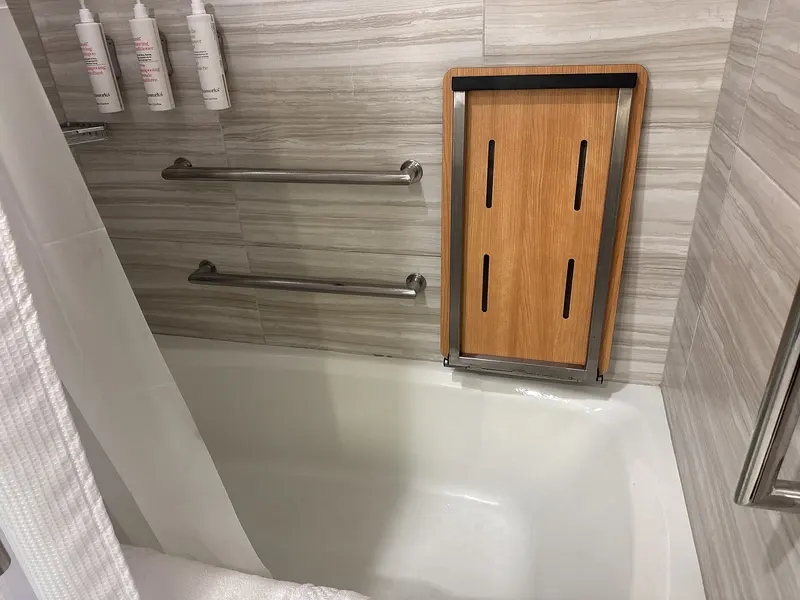
If you help a partner, parent or friend to wash, bath or shower, a few simple steps make it safer and more comfortable for you both. What the NHS advises, and where carers can get free help and equipment.
-
 Raised toilet seats and toilet frames
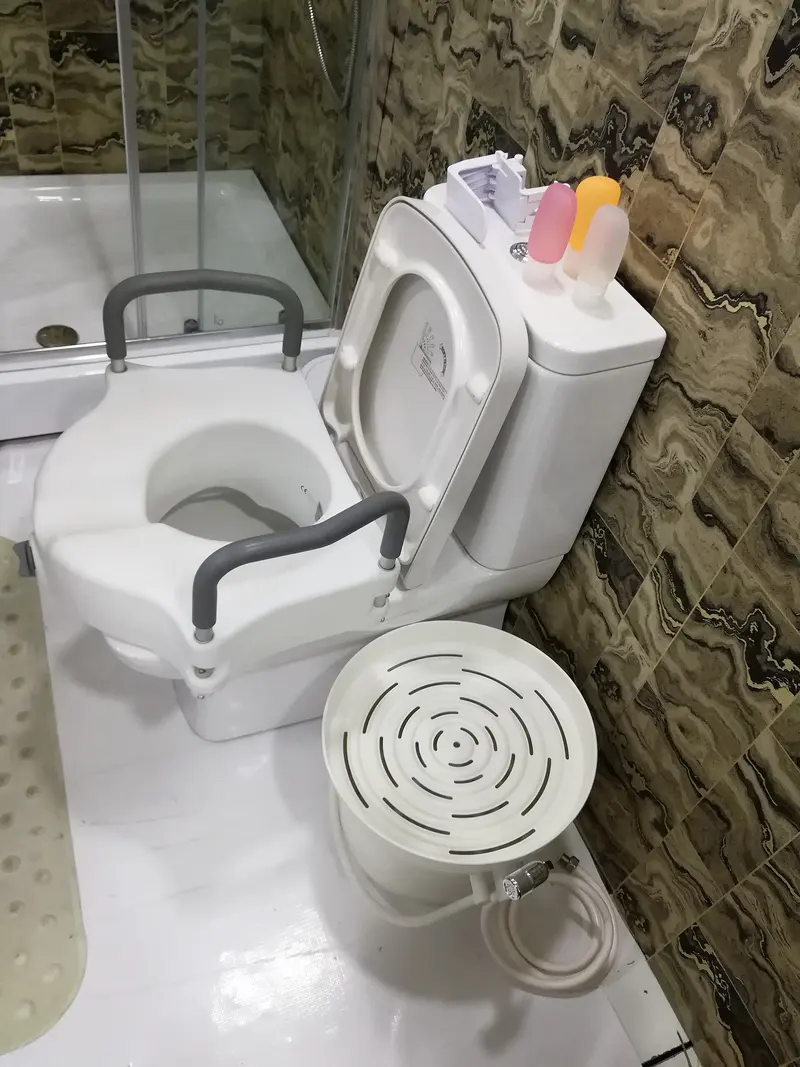
If getting on and off the toilet is hard, a raised seat, a toilet frame or a well-placed rail can help. What each one does and what to check.
Photo: Ashashyou, CC BY-SA 3.0
Sources we checked
- NHS: Norovirus (vomiting bug) (reviewed 31 December 2024) (opens another website)
- GOV.UK (UKHSA): How to stop norovirus spreading (updated 17 April 2023) (opens another website)
Checked 22 November 2026. Rules, amounts and phone numbers can change, so please check with the organisation before you rely on them.
Get an assessment first
An occupational therapist (OT) can visit you at home and recommend what is safe and suitable for you. Ask your council’s adult social care team — in Northern Ireland, your Health and Social Care Trust.
This article is general information, not medical, financial or legal advice. Everyone’s needs are different. Speak to an occupational therapist, your GP or the organisations we link to before making decisions.