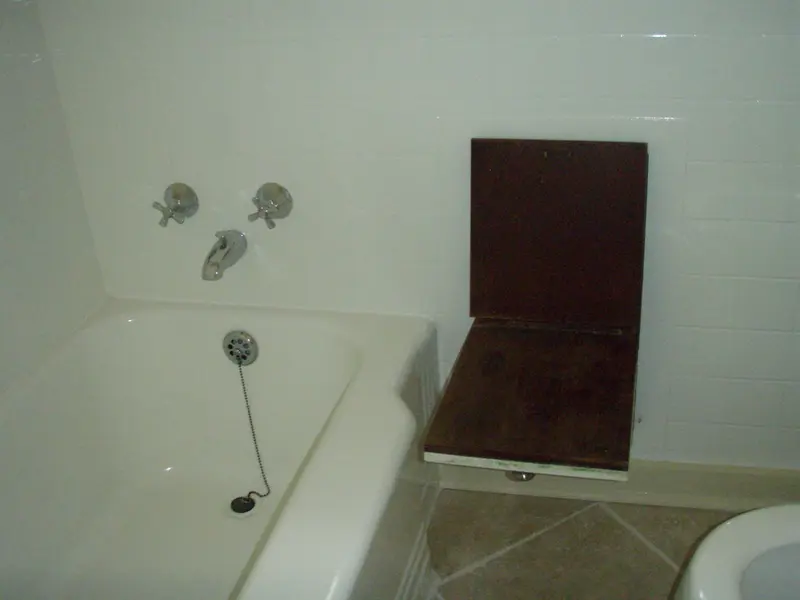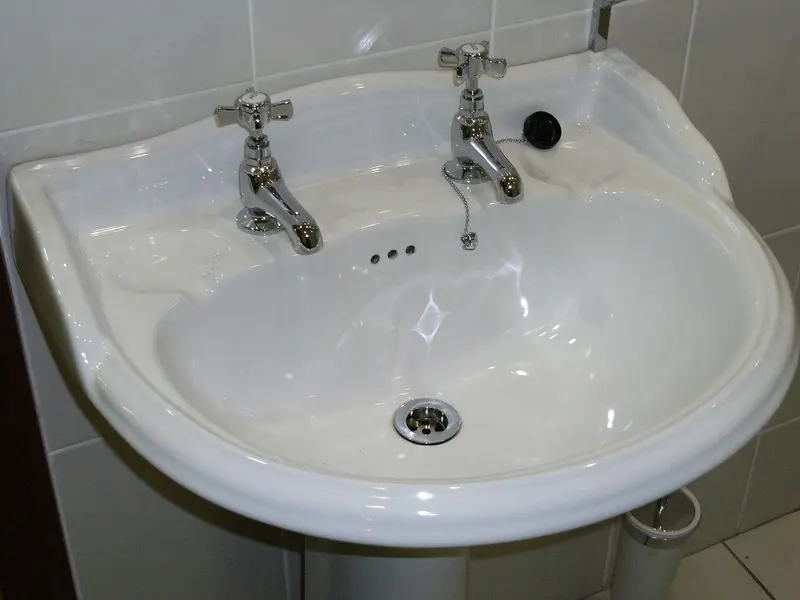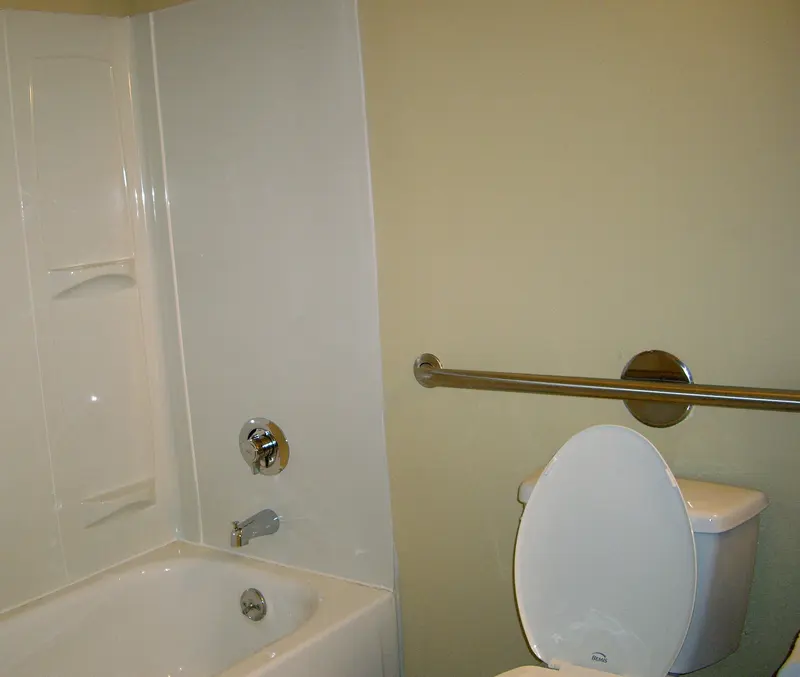
A white toilet against white tiles, a chrome rail on a pale wall, a white bar of soap on a white basin: a typical bathroom is a sea of pale, shiny surfaces. For someone with sight loss, that can make it hard to find things, judge where the edge of the bath is, or spot a wet patch on the floor.
Many of the fixes are cheap. This article summarises RNIB's advice on practical adaptations at home, focusing on the bathroom. RNIB's Helpline (below) can talk through your own situation.
The photo above shows the problem: a metal rail on a pale wall and a white toilet against a white bath are hard to pick out.
Contrast: make things stand out
RNIB's main theme is contrast — making each object a different colour or tone from what's behind it. In the bathroom it suggests:
- Grab rails that contrast with the wall. RNIB says they are easier to see and safer to use. If rails are being fitted — see our guide to grab rails — ask for a colour that stands out against your tiles.
- Toilet seats and washbasins that contrast with the surfaces near them, if you're buying new ones. A coloured or dark toilet seat on a white toilet is one of the simplest changes.
- Soap, soap dispensers, toilet rolls and toilet roll holders in a colour that contrasts with the wall, basin and toilet.
- Switches and sockets that contrast with the walls.
- Doors painted in a colour or tone that contrasts with the door frame, so the doorway is easier to find.
Tiles and floors
If you're redoing the bathroom, RNIB suggests:
- matt wall tiles, which reflect less light and cause less glare than shiny ones
- tiles in a colour that contrasts with the floor, so the edge where wall meets floor is clear
- safety flooring that is non-slip and non-reflective
Our guide to preventing slips and falls covers non-slip flooring and mats, and walk-in and level-access showers explains options that remove the step into the shower.
Labels and tactile markers
Shampoo, conditioner and shower gel bottles often look and feel alike. RNIB suggests:
- written labels in big letters, made with a thick black felt-tip pen
- brightly coloured tactile markers (small raised bumps) to help find controls by touch — useful on a shower dial to mark your usual temperature setting
A rubber band around one bottle is another simple way to tell two bottles apart by touch.
Lighting
RNIB says having the best lighting for you is very important, and has a separate page on lighting. In a bathroom, think about light at the basin and mirror and a light on the route from the bedroom at night. Our guide to preventing slips and falls covers night lights, and the bathroom aids below include one.
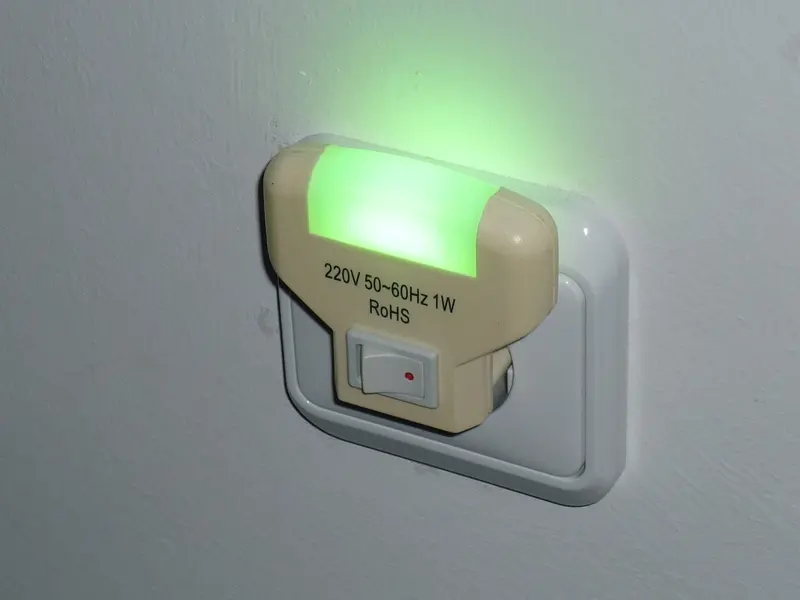
- Plug-in night lightMats, thermometers and night lights
A small light for the hallway or bedroom that helps you find your way, and the light switch, at night.
- Non-slip bath or shower matMats, thermometers and night lights
A mat with suckers that grips the bottom of the bath or shower, to cut the risk of slipping.
- Bath thermometerMats, thermometers and night lights
A thermometer that floats in the bath or shows the water temperature, as an extra check against scalds.
What each aid is and what to check before buying is on our bathroom aids page. We do not test or rate products. An occupational therapist can tell you which aids are safe for you.
Water temperature
If it's hard to read a shower or tap control, it's also harder to judge temperature safely. A thermostatic shower or mixing valve limits how hot the water can get; our guide to preventing scalds explains how they work and the safe temperatures for bathing.
When sight loss comes with other needs
If someone with sight loss also has dementia, our guide to a dementia-friendly bathroom uses many of the same principles. If getting in and out of the bath or shower is becoming difficult, an occupational therapy assessment is free and can lead to equipment and adaptations.
Getting advice
RNIB's Helpline is 0303 123 9999, open Monday to Friday, 9am to 6pm. It can advise on adaptations, products and the support available locally.
A quick checklist
- Can you clearly see the toilet seat, the grab rails and the edge of the bath?
- Do the soap, toilet roll and towels stand out against what's behind them?
- Is the floor non-slip and not shiny?
- Can you tell your bottles apart without reading them?
- Is there enough light at the basin and on the way to the bathroom at night?
-
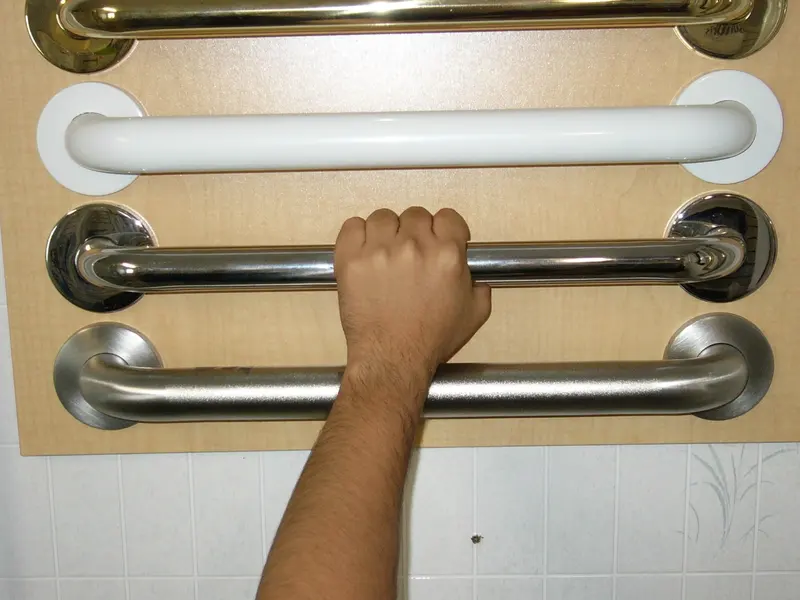 Grab rails: where they help and how they are fitted
A grab rail gives you something firm to hold getting in and out of the bath or shower, or up from the toilet. Where rails go and how they must be fixed.
Photo: Oneweekendwebsite, CC BY-SA 3.0
-
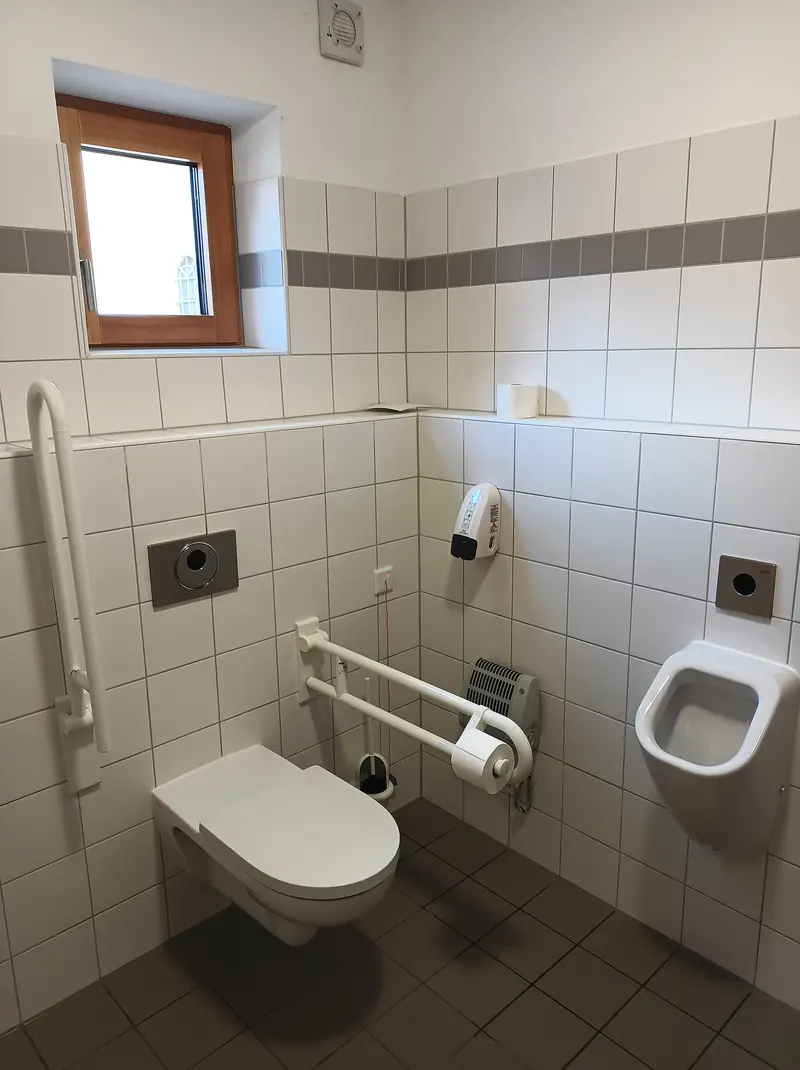 Preventing slips and falls in the bathroom
Wet floors, getting in and out of the bath and night-time trips to the toilet are common causes of falls. Simple changes that help, from official advice.
Photo: APneunzehn74, CC0
-
 A dementia-friendly bathroom
Dementia can make it harder to find the toilet, see where things are and feel safe when washing. Simple changes to lighting, colour, signs and fittings that the NHS suggests, and how to get help.
Photo: Tetris L, CC BY-SA 3.0
Sources we checked
Checked 23 November 2026. Rules, amounts and phone numbers can change, so please check with the organisation before you rely on them.
Get an assessment first
An occupational therapist (OT) can visit you at home and recommend what is safe and suitable for you. Ask your council’s adult social care team — in Northern Ireland, your Health and Social Care Trust.
This article is general information, not medical, financial or legal advice. Everyone’s needs are different. Speak to an occupational therapist, your GP or the organisations we link to before making decisions.