In short
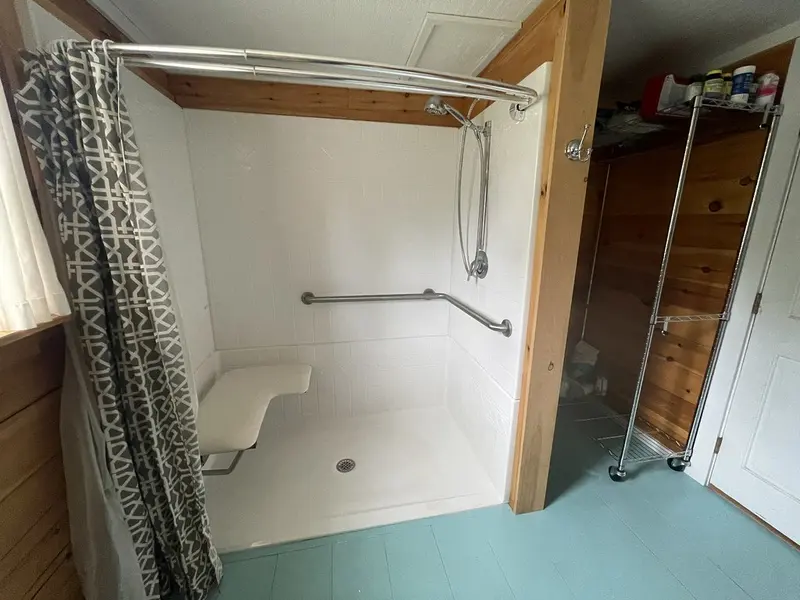
- A level-access shower has no step, or a lip of less than 15mm. A low shower tray has a small step.
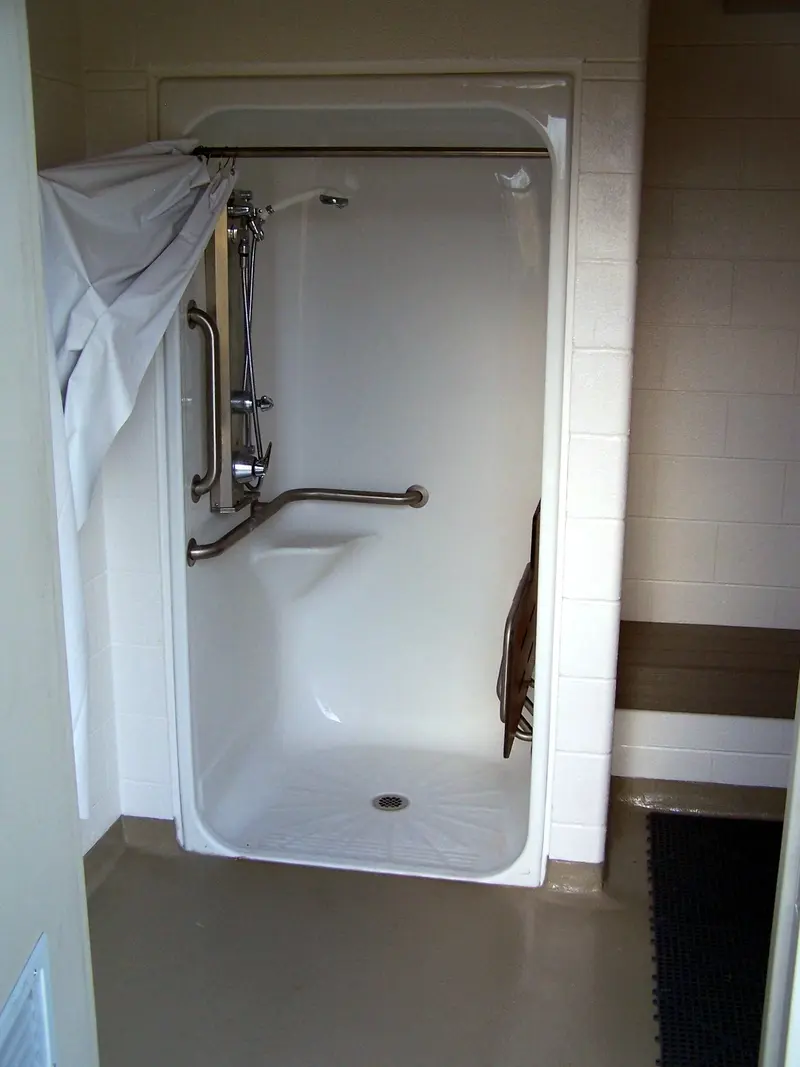
- Ask for a shower seat and grab rails as part of the plan.
- A level floor lets a wheeled shower chair roll straight in, but water can escape more easily.
- Choose a shower with good temperature control to protect against scalds.
- In England, a level-access shower is one of the examples GOV.UK gives of work a Disabled Facilities Grant can pay for.
Walk-in, low-tray and level-access showers
People use these words in different ways. What matters is how high the step is to get into the shower. These figures come from Living Made Easy:
| Type of shower | Step to get in | Good to know |
|---|---|---|
| Standard shower tray | Can be 150mm (6 inches) or more | Can be hard to step over if your mobility is poor |
| Low-level tray | Can be as low as 32mm (about 1¼ inches) | A small lip, which helps keep water in the tray |
| Level-access (easy-access) tray or floor | Less than 15mm | Easiest to walk or wheel into, but there is more risk of water getting out |
A government-commissioned review in 2018 found that showers made up more than half of all the adaptations paid for by Disabled Facilities Grants in England.
Who might a level-access shower suit?
A level-access shower may suit you if:
- getting in and out of the bath has become hard or unsafe
- you use a walking stick or frame
- you need to sit down to wash
- a carer helps you, or you use a wheeled shower chair
If you use a wheelchair most of the time, you may need more space than a shower tray gives. A wet room is worth looking at.
Seats and grab rails
Ask for a seat and rails as part of the plan, not as an extra afterwards.
- Fold-down seats fix to the wall and fold up when you do not need them. Living Made Easy says the wall and fixings "must be able to sustain the required weight of the user".
- Shower stools and chairs stand on the floor. Check that the shower tray is made to take the weight of a person sitting on a stool, or it may crack.
- Wheeled shower chairs can be pushed into a level-access shower.
Living Made Easy gives example positions for rails next to a shower seat, such as a rail on the side wall about 200mm above the seat. An occupational therapist will work out the right positions for you. See our guides to grab rails and shower seats.
Screens, doors and curtains
- Half-height doors (750mm to 900mm high) let a carer reach over to help. Living Made Easy says you still need a shower curtain to stop water splashing onto the floor.
- Outward-opening doors do not take up space inside the shower, but they may drip water on the floor when you open them.
- Weighted shower curtains hang closer to the floor. Living Made Easy says a curtain should finish about 5mm above the floor, without dragging on it.
Size and drainage
Living Made Easy says the smallest shower trays are usually 900mm by 900mm, and larger ones can be 1500mm by 1200mm or more. A bigger space is easier if you use a seat or need help.
Water has to drain away from the shower. Many shower trays rely on the water running downhill to the drain. In some homes, a pump is needed. Ask your installer how the water will drain away.
The shower itself
- Temperature control. Living Made Easy suggests looking for thermostatic valves with TMV2 certification and products with the BEAB Care Mark, which keep the water temperature steady. Read our guide to preventing scalds.
- Electric showers. Electrical Safety First says an electric shower "must be installed by a registered competent electrician and be supplied on its own circuit".
- Easy controls. Make sure you can see and use the controls while sitting down.
Help with costs
- In England, GOV.UK gives a level-access shower as an example of the kind of change a Disabled Facilities Grant can help with.
- If you are 60 or over, built-in shower seats, and showers that contain a built-in seat, have VAT at 5% when they are supplied and installed in your home.
- If you are disabled, adapting a bathroom for your needs can be free of VAT. See our VAT relief guide.
Sources we checked
- Living Made Easy: Showers (opens another website)
- Living Made Easy: Shower trays and wetroom flooring (opens another website)
- Living Made Easy: Adapting your home – the bathroom (factsheet) (opens another website)
- GOV.UK: Disabled Facilities Grants (opens another website)
- DFG and Other Adaptations: External Review – summary (December 2018) (opens another website)
- Electrical Safety First: Electrical safety in the bathroom (opens another website)
- GOV.UK: VAT on mobility aids (5% for people aged 60 or over) (opens another website)
We last checked these sources on 3 October 2026. Rules and amounts can change, so please check with the organisation before you rely on them.
Get an assessment first
An occupational therapist (OT) can visit you at home and recommend what is safe and suitable for you. Ask your council’s adult social care team — in Northern Ireland, your Health and Social Care Trust.
This guide is general information, not medical, financial or legal advice. Everyone’s needs are different. Speak to an occupational therapist, your GP or the organisations we link to before making decisions.