For many older and disabled people, the thing that decides whether a trip out is possible isn't the journey or the shops — it's the toilet. Will there be one, will it be accessible, and will it be open? In the run-up to Christmas, with more trips to town and to see family, it's worth knowing about two things: the RADAR key and Changing Places toilets.
What the RADAR key is
Many accessible toilets in the UK are kept locked. The Bladder & Bowel Community explains that many of them are fitted with a Nicholls & Clarke lock, which can only be opened with a RADAR key. The key belongs to the National Key Scheme (NKS), which began in 1981.
It says over 400 local authorities use the scheme, along with many public, voluntary and commercial organisations — so you'll find these locks on council toilets, at railway stations, in shopping centres, pubs and cafés.
Getting a key — and why it should be the official one
According to the Bladder & Bowel Community:
- RADAR keys can be bought from the Disability Rights UK online shop.
- Some local councils sell or give out keys — ask yours.
- Disability Rights UK doesn't accept a key as approved unless it is the official key made by Nicholls and Clarke. Unofficial keys sold online may not work in every lock, and may even damage it.
So if you're buying one, buy from Disability Rights UK or your council rather than a marketplace listing. The Bladder & Bowel Community also says that members of its Bladder & Bowel Home Delivery service can request a key at no cost, and members can buy one without VAT.
A practical tip: keep the key on the same ring as your house keys, or in the bag you always take out, so it's with you when you need it.
When a standard accessible toilet isn't enough
A standard accessible toilet works for many people, but not for everyone. Some people need to be lifted onto the toilet, or need to lie down to be changed, and a standard accessible toilet has no room or equipment for that. That's what Changing Places toilets are for.
The Changing Places website describes a Changing Places toilet as a larger accessible toilet with:
- a ceiling track hoist, so nobody has to lift the person manually
- a height-adjustable, adult-sized changing bench
- a centrally placed toilet with room on either side for a wheelchair user and a carer
- at least 12 square metres of space
- often a height-adjustable washbasin, and sometimes a shower
It says over 250,000 people in the UK need these facilities to get out and about, and at the time of checking it listed 2,741 registered Changing Places toilets.
Finding one before you go
The Changing Places website has a map of registered toilets and a route planner, so you can plan a journey around them — useful for a Christmas outing to a city centre, a garden centre or a long car journey to family.
For standard accessible toilets, it's worth asking venues ahead of time whether they have one, whether it uses a RADAR lock, and whether it's ever used as a storeroom at busy times.
If you need the loo urgently
Needing to go often or urgently is one of the main reasons people stop going out. The Bladder & Bowel Community offers a free digital "Just Can't Wait" toilet card on its website. If urgency or leaks are a problem, it's also worth talking to a GP — see our article on bladder weakness and where to get help.
At home: the same problems, smaller scale
If getting on and off the toilet is hard out and about, it is probably hard at home too. Raised toilet seats, toilet frames and grab rails are often available free after an assessment. Our guides to raised toilet seats and toilet frames, grab rails and getting an occupational therapy assessment explain how.
- Raised toilet seatRaised toilet seats and toilet frames
A thick seat that fits on top of the toilet bowl and makes the toilet higher, so you do not have to bend so far.
- Raised toilet seat with armsRaised toilet seats and toilet frames
A raised toilet seat with padded arms on each side to push up from.
- Toilet frame (toilet surround)Raised toilet seats and toilet frames
A frame that stands around the toilet, giving you arms to hold as you sit down and get up.
What each aid is and what to check before buying is on our bathroom aids page. We do not test or rate products. An occupational therapist can tell you which aids are safe for you.
-
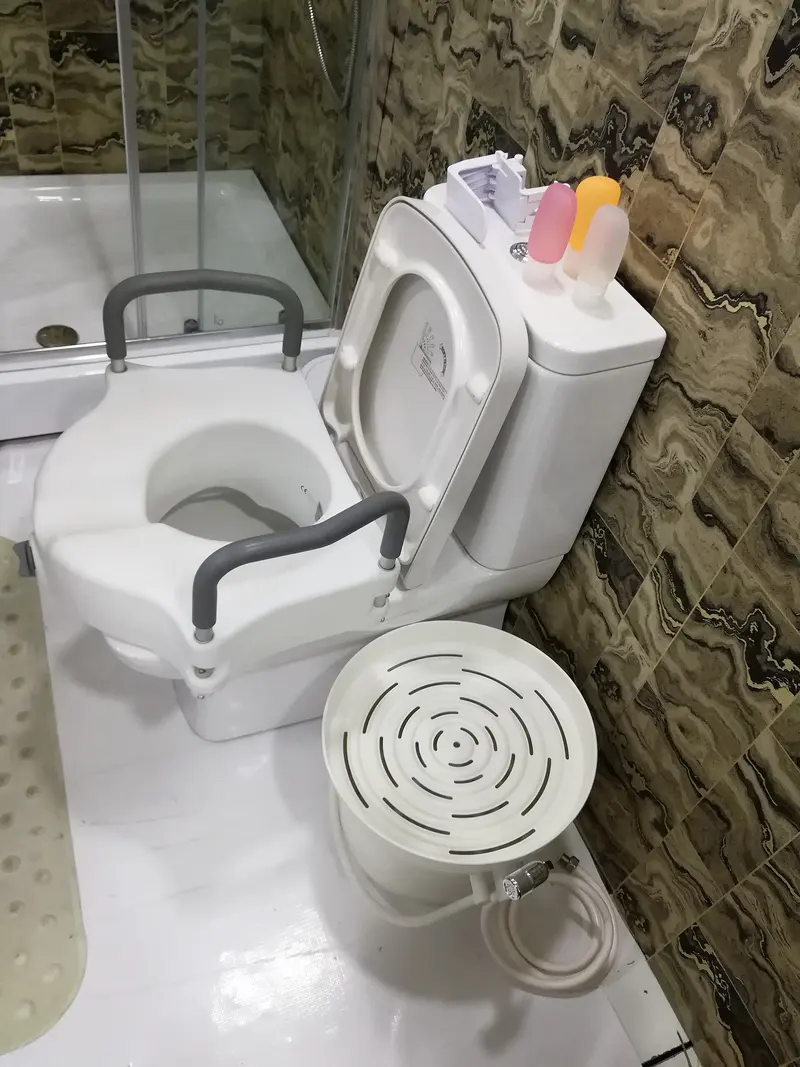 Raised toilet seats and toilet frames
If getting on and off the toilet is hard, a raised seat, a toilet frame or a well-placed rail can help. What each one does and what to check.
Photo: Ashashyou, CC BY-SA 3.0
-
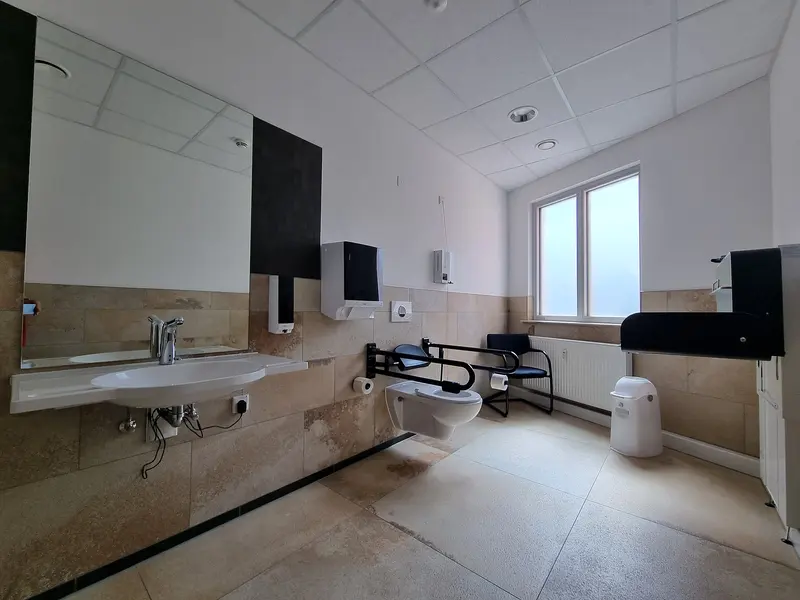 Occupational therapist home visit: getting an assessment
An occupational therapist (OT) can visit you at home and recommend what would help. How to ask your council for an assessment, or find a private OT.
Photo: Robert Kästner FVA GmbH, CC BY-SA 4.0
-
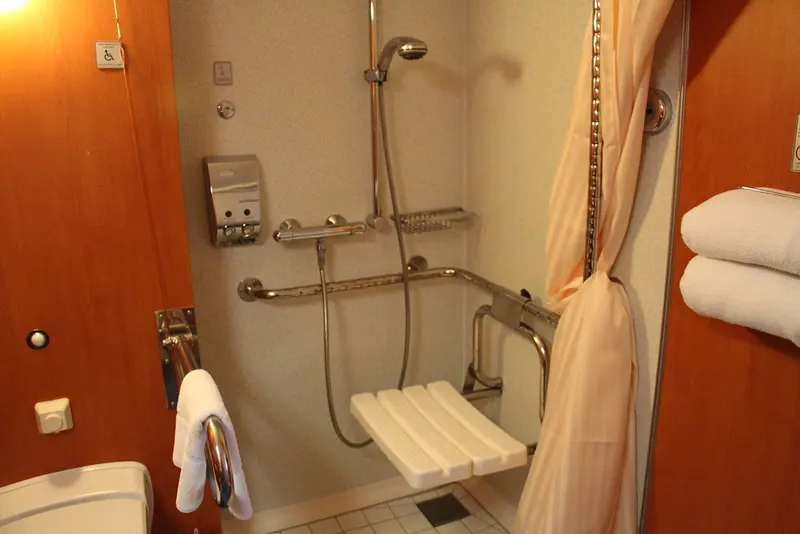 Charities and free advice
Free, independent help with adaptations, grants and finding equipment — from national charities, home improvement agencies and advice services across the UK.
Photo: ironypoisoning, CC BY-SA 2.0
Sources we checked
- Bladder & Bowel Community: RADAR keys explained (opens another website)
- Changing Places (Changing Places Consortium): home page and toilet map (opens another website)
Checked 23 November 2026. Rules, amounts and phone numbers can change, so please check with the organisation before you rely on them.
Get an assessment first
An occupational therapist (OT) can visit you at home and recommend what is safe and suitable for you. Ask your council’s adult social care team — in Northern Ireland, your Health and Social Care Trust.
This article is general information, not medical, financial or legal advice. Everyone’s needs are different. Speak to an occupational therapist, your GP or the organisations we link to before making decisions.