Leaking when you cough or laugh, or a sudden urge that leaves you rushing for the toilet, is far more common than most people realise — and far less talked about. It can stop people going out, sleeping well or visiting family. The NHS is clear that it is not an inevitable part of ageing, and that a lot can be done.
This article summarises the NHS's information on urinary incontinence. It is general information; the NHS advice is to see a GP if you have any type of urinary incontinence, and you shouldn't feel embarrassed about doing so.
The main types
The NHS describes:
- Stress incontinence — urine leaks when the bladder is under pressure, for example when you cough or laugh. It is usually caused by weakened or damaged pelvic floor muscles and the muscle that closes the bladder.
- Urge incontinence — urine leaks as you feel a sudden, intense urge to pee, or soon afterwards. It is usually caused by the bladder muscle being overactive.
- Overflow incontinence — the bladder can't empty fully, often because of a blockage, so it leaks frequently.
- Total incontinence — the bladder can't store any urine.
Many people have a mix of stress and urge incontinence. Risk factors the NHS lists include pregnancy and vaginal birth, obesity, family history and increasing age.
Things that can help
The NHS suggests:
- Pelvic floor exercises. Its treatment page describes a programme of at least 8 contractions, at least 3 times a day, for at least 3 months.
- Bladder training — gradually lengthening the time between feeling the need to go and going — usually over at least 6 weeks.
- Cutting down on caffeine (tea, coffee and cola) and alcohol.
- Losing weight if you're overweight.
On fluids, the NHS does *not* suggest drinking less overall. It suggests drinking less in the hours before bed if you're getting up at night, but still drinking enough during the day — a GP can advise how much.
Products in the meantime
The NHS mentions absorbent pads and pants, handheld urinals and catheters as products that can help you manage while you wait for treatment, though they don't treat the problem itself.
NHS continence services
Many areas have an NHS continence (or bladder and bowel) service, but how you reach it varies. As an example, Kent Community Health NHS Foundation Trust's service accepts referrals from GPs and other professionals and also self-referrals. It assesses bladder, bowel and pelvic floor problems, and says it may help with NHS continence products where treatments and other options have been tried — after an eligibility assessment, and from a range that isn't the same as the full choice in the shops.
Other areas only take referrals through a GP or nurse, so if in doubt, start with your GP practice.
Making the bathroom easier
When urgency is the problem, the time it takes to get to the toilet matters. Practical changes include:
- a clear, well-lit route from the bedroom at night — our guide to preventing slips and falls covers night lights
- a raised toilet seat or toilet frame if getting down and up again is slow — see raised toilet seats and toilet frames
- clothing that is quick to undo
- Raised toilet seatRaised toilet seats and toilet frames
A thick seat that fits on top of the toilet bowl and makes the toilet higher, so you do not have to bend so far.
- Raised toilet seat with armsRaised toilet seats and toilet frames
A raised toilet seat with padded arms on each side to push up from.
- Toilet frame (toilet surround)Raised toilet seats and toilet frames
A frame that stands around the toilet, giving you arms to hold as you sit down and get up.
What each aid is and what to check before buying is on our bathroom aids page. We do not test or rate products. An occupational therapist can tell you which aids are safe for you.
- Plug-in night lightMats, thermometers and night lights
A small light for the hallway or bedroom that helps you find your way, and the light switch, at night.
What each aid is and what to check before buying is on our bathroom aids page. We do not test or rate products. An occupational therapist can tell you which aids are safe for you.
If you care for someone with continence problems, our guide to helping someone to wash covers keeping skin clean and protecting your own back.
Going out
Knowing where you can get to a toilet makes trips out much less stressful. Our article on the RADAR key and Changing Places toilets explains how to get into locked accessible toilets and find larger ones with a hoist and changing bench.
-
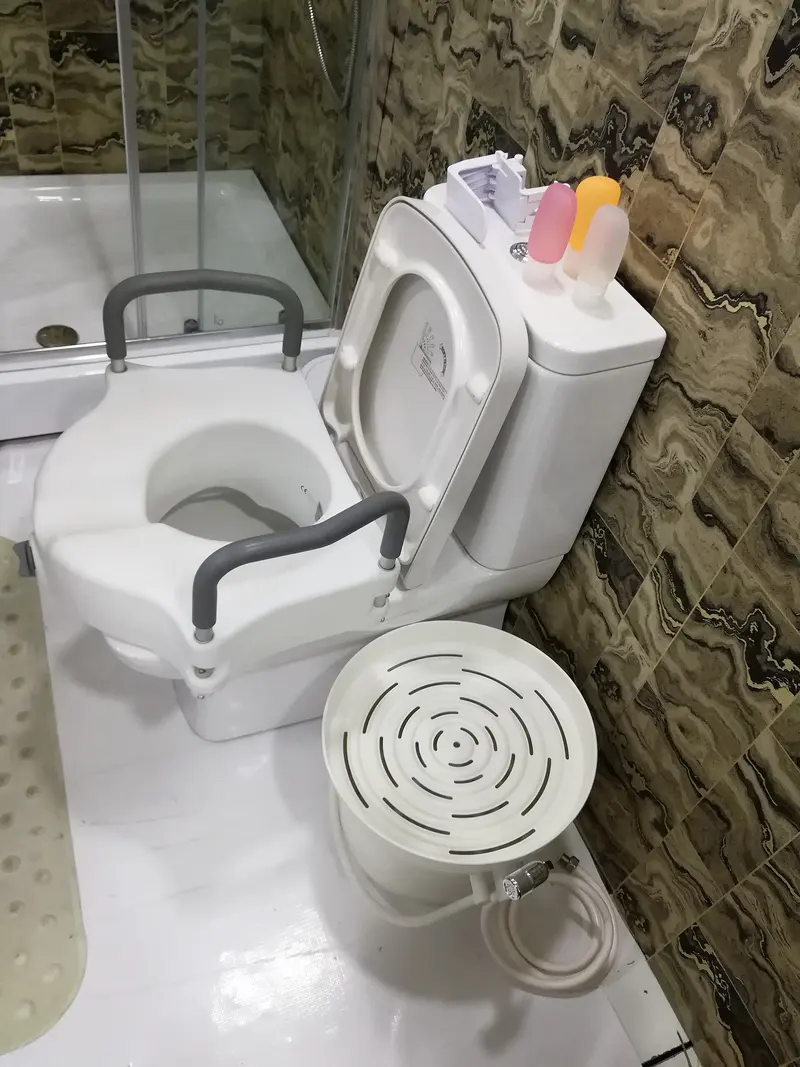 Raised toilet seats and toilet frames
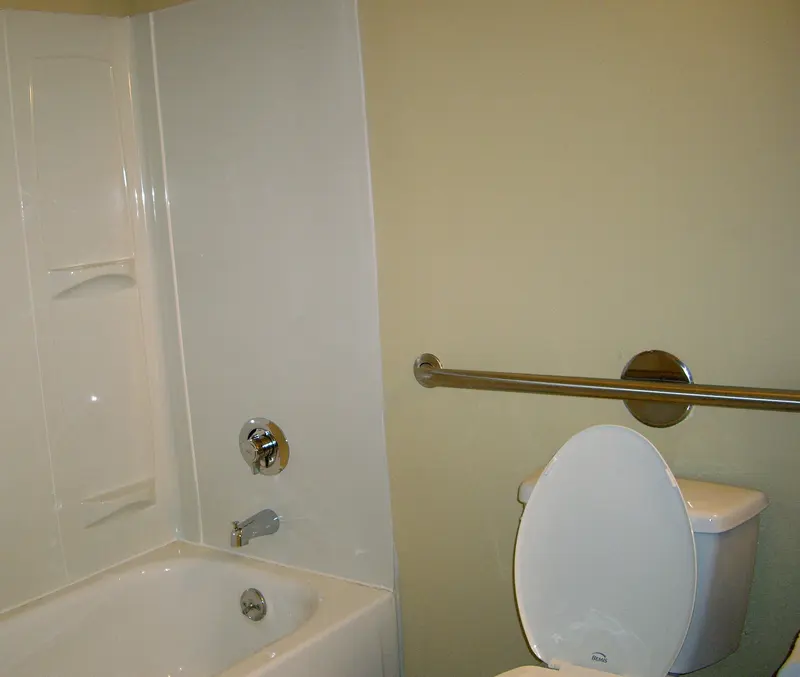
If getting on and off the toilet is hard, a raised seat, a toilet frame or a well-placed rail can help. What each one does and what to check.
Photo: Ashashyou, CC BY-SA 3.0
-
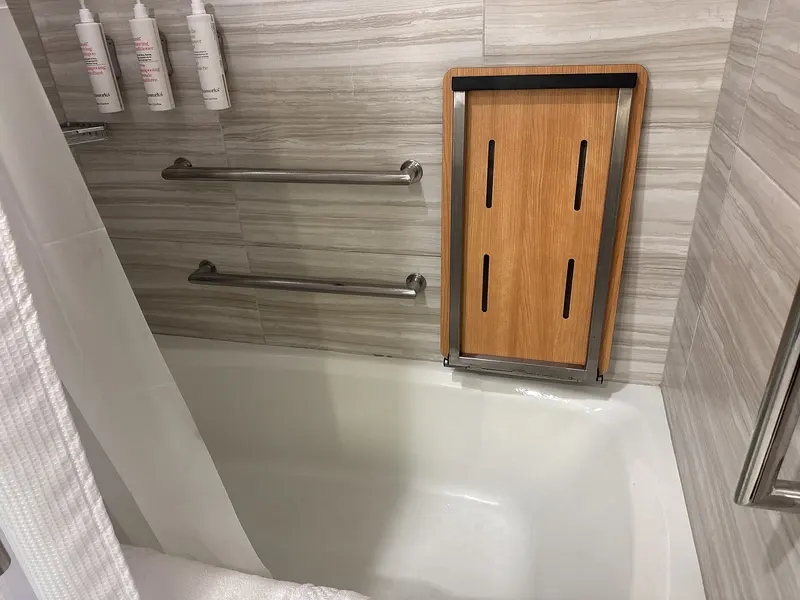 Helping someone to wash: tips for carers
If you help a partner, parent or friend to wash, bath or shower, a few simple steps make it safer and more comfortable for you both. What the NHS advises, and where carers can get free help and equipment.
-
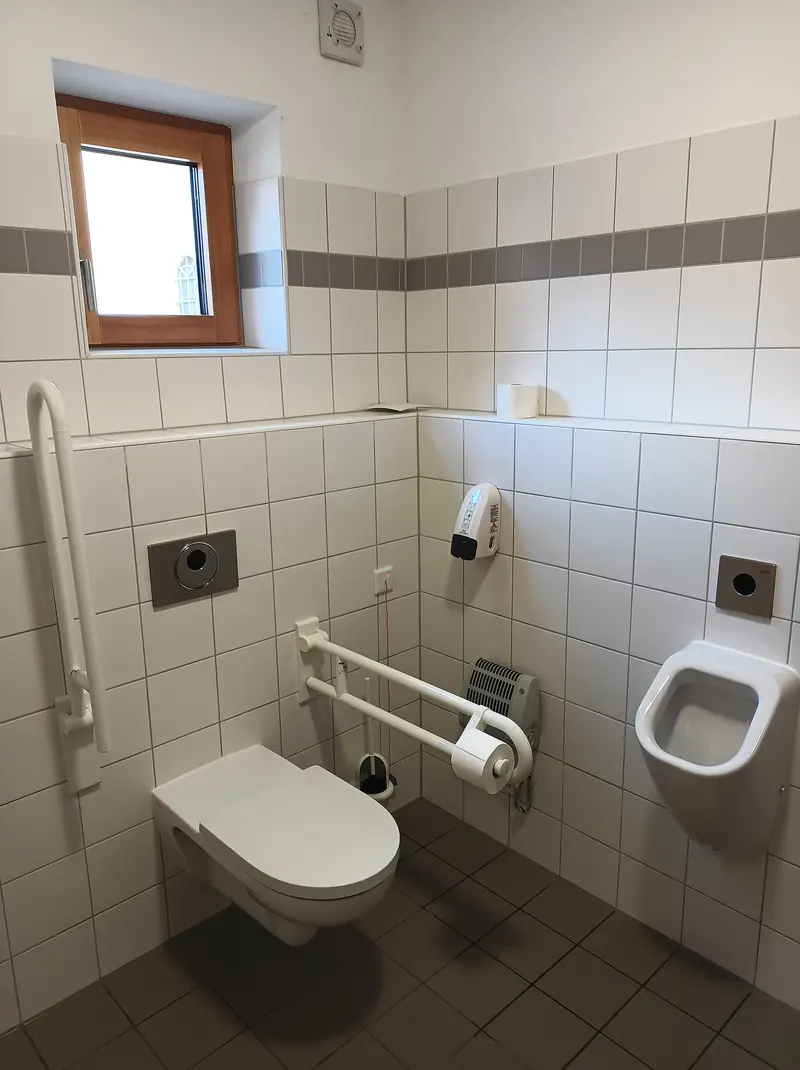 Preventing slips and falls in the bathroom
Wet floors, getting in and out of the bath and night-time trips to the toilet are common causes of falls. Simple changes that help, from official advice.
Photo: APneunzehn74, CC0
Sources we checked
- NHS: Urinary incontinence (page last reviewed 15 June 2023) (opens another website)
- NHS: Urinary incontinence — non-surgical treatment (page last reviewed 15 June 2023) (opens another website)
- Kent Community Health NHS Foundation Trust: Continence service (an example of a local NHS service) (opens another website)
Checked 23 November 2026. Rules, amounts and phone numbers can change, so please check with the organisation before you rely on them.
Get an assessment first
An occupational therapist (OT) can visit you at home and recommend what is safe and suitable for you. Ask your council’s adult social care team — in Northern Ireland, your Health and Social Care Trust.
This article is general information, not medical, financial or legal advice. Everyone’s needs are different. Speak to an occupational therapist, your GP or the organisations we link to before making decisions.