For many families, Christmas is the longest time they spend in an older relative's home all year. It's often when people first notice that something has changed — that getting in and out of the bath has become a struggle, or that the bathroom is being avoided.
This article suggests what to look out for, how to raise it kindly, and where help comes from. It is general information, not medical advice; the free assessments described below are the way to get advice that fits the person.
Things you might notice
None of these means something is wrong on its own, but together they can be a sign that washing has become harder:
- the bath looks unused, and the person says they "just have a wash at the sink"
- holding onto the towel rail, basin or door handle to get in or out of the bath or up from the toilet
- reluctance to have a bath or shower, or putting it off until visitors have gone
- wet or slippery floors, or bath mats that slide
- difficulty turning taps, or reaching feet and back
- a personal alarm pendant left on the bedside table because it isn't waterproof
Our guides to preventing slips and falls and personal alarms explain why the bathroom matters so much, and what simple changes can help.
Raising it without taking over
Nobody likes being told they can't manage. A few approaches that tend to make the conversation easier:
- Start from what they want. For most people that is to stay independent in their own home. Small aids are a way of keeping that, not losing it.
- Ask, don't announce. "Is the bath still OK for you?" invites an honest answer more than "You can't use that bath any more."
- Talk about the thing, not the person. A slippery bath or a stiff tap is a problem to solve.
- Leave it with them. You don't have to settle anything over Christmas lunch. Offering to find out about an assessment is often enough.
Our guide to helping someone to wash has more on starting from what the person wants.
The free needs assessment
The most useful next step is usually a needs assessment from the local council. The NHS says that anyone can ask for one, and it is free. You contact social services at the council, by phone or online.
A social worker or occupational therapist asks how the person manages everyday tasks such as washing, dressing and cooking, and may ask them to show how they do something. The NHS suggests mentioning every task that is a struggle — "even the little ones like turning taps on and off".
If the person qualifies for help, they will normally have a financial assessment to see whether they pay towards it. If they don't qualify, the NHS says the council should still offer free advice about other local help.
Read more in our guide to getting an occupational therapy assessment.
Small aids and adaptations are often free
The NHS says councils usually pay for minor adaptations such as grab rails, and that your council should pay for each adaptation that costs less than £1,000 (this is the rule in England). It gives bathroom examples including a bath lift, a walk-in shower or a rail to hold onto when getting out of the bath. Larger work may be helped by a Disabled Facilities Grant.
So before anyone buys equipment as a gift, it is worth asking whether the council would assess and provide it — see free equipment and small adaptations.
- Bath-side rail (clamps onto the bath)Grab rails
A rail that clamps onto the side of the bath, giving you something to hold as you step in and out.
- Bath boardBath lifts, boards and seats
A waterproof board that sits across the top of the bath. You sit on it, swing your legs over, and wash sitting down.
- Raised toilet seatRaised toilet seats and toilet frames
A thick seat that fits on top of the toilet bowl and makes the toilet higher, so you do not have to bend so far.
What each aid is and what to check before buying is on our bathroom aids page. We do not test or rate products. An occupational therapist can tell you which aids are safe for you.
If you help out, you can get an assessment too
If you look after someone regularly — including a parent — the NHS says you can ask your council for a carer's assessment. It is free and anyone over 18 who cares for someone can ask. Depending on the outcome, it might lead to things such as a break from caring, help with some costs, or safe lifting training.
Someone to talk it through with
The Age UK Advice Line (0800 678 1602, free, 8am to 7pm, 365 days a year) is for older people and their families, friends and carers. It can be a useful first call if you are not sure where to start.
-
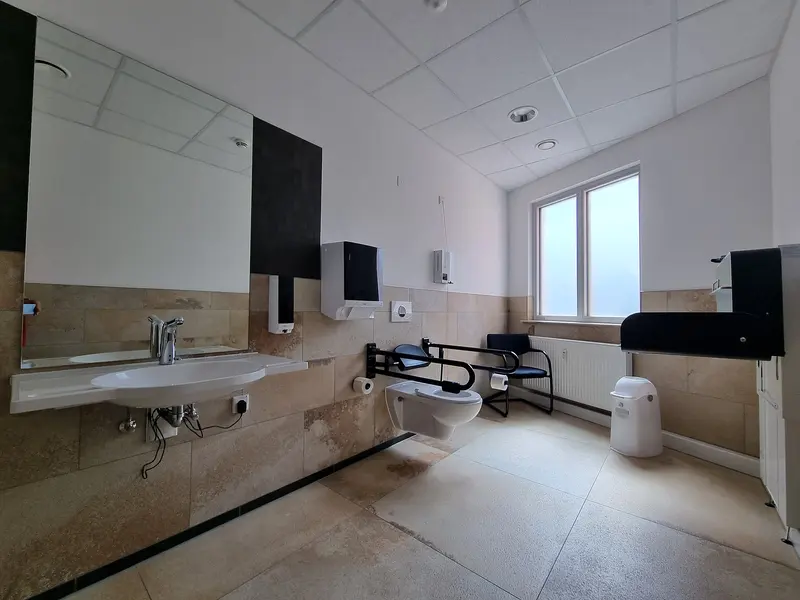 Occupational therapist home visit: getting an assessment
An occupational therapist (OT) can visit you at home and recommend what would help. How to ask your council for an assessment, or find a private OT.
Photo: Robert Kästner FVA GmbH, CC BY-SA 4.0
-
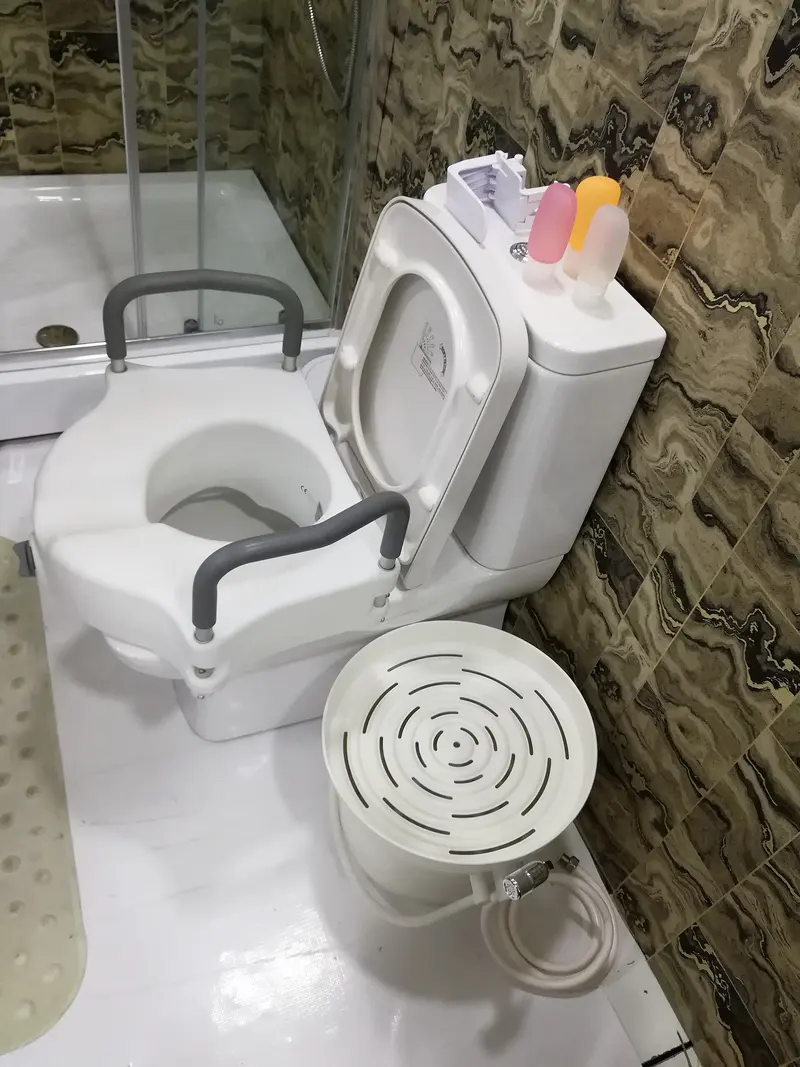 Free bathroom equipment and small adaptations
In England, the council must provide aids and minor adaptations costing £1,000 or less free if your assessment shows you need them. How to ask.
Photo: Ashashyou, CC BY-SA 3.0
-
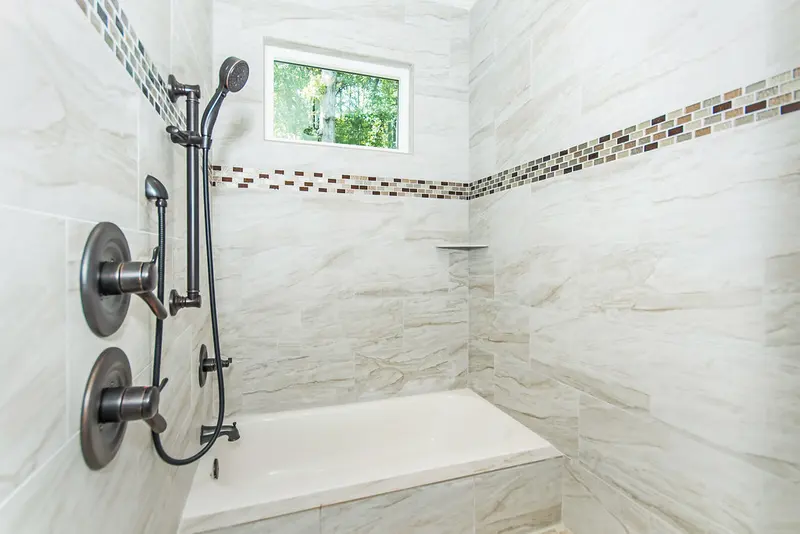 Bath, shower or wet room: how to choose
A plain comparison of keeping your bath with some aids, a walk-in bath, a level-access shower and a wet room — and the questions that help you decide.
Photo: LakeMartinVoice, CC BY 2.0
Sources we checked
- NHS: Getting a needs assessment (reviewed 22 August 2024) (opens another website)
- NHS: Carer's assessments (reviewed 1 July 2022) (opens another website)
- NHS: Home adaptations (reviewed 12 December 2025) (opens another website)
- Age UK: Age UK Advice Line (opens another website)
Checked 22 November 2026. Rules, amounts and phone numbers can change, so please check with the organisation before you rely on them.
Get an assessment first
An occupational therapist (OT) can visit you at home and recommend what is safe and suitable for you. Ask your council’s adult social care team — in Northern Ireland, your Health and Social Care Trust.
This article is general information, not medical, financial or legal advice. Everyone’s needs are different. Speak to an occupational therapist, your GP or the organisations we link to before making decisions.